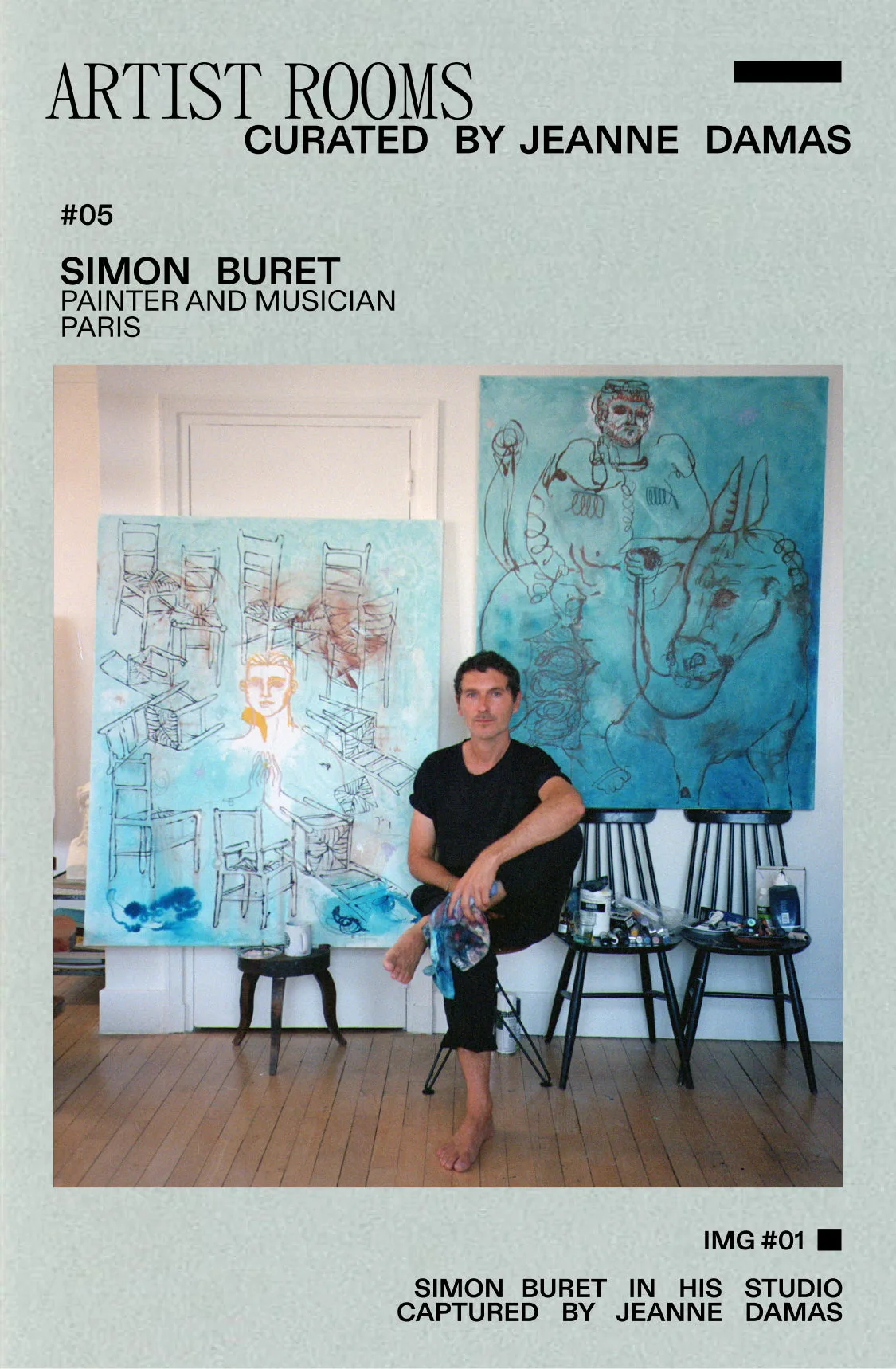
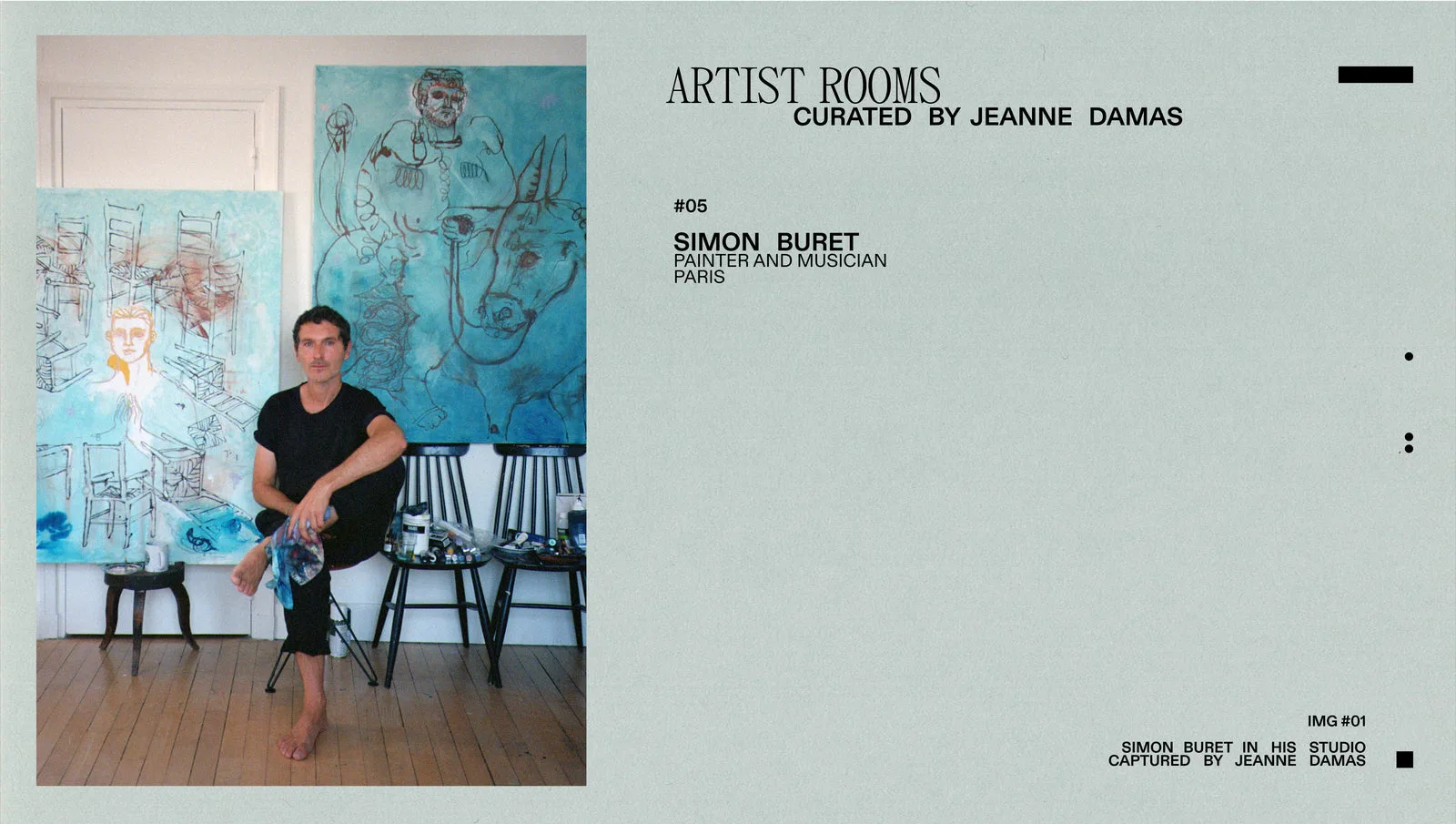
Singer of the duo AaRON, Simon Buret has established himself in recent years as a painter, exploring an intimate and poetic universe, where emotions and silence mingle. Jeanne Damas met him in his apartment-studio in Paris, a suspended place, in his image.
His new works will be presented at the Enter Art Fair in Copenhagen with the Nil Gallery at the end of August. He will also unveil his bronze sculpture The Day on September 18 at the Rinck Gallery in New York.
INTERVIEW
JD: Do you remember the very first painting you did? Do you still have it?
SB: Yes, I remember it very well. It was not yet “a painting”, in the formal sense of the term. It was something very instinctive, very raw — almost like a shock. It was more of a cry than an image. I think I still have it somewhere, folded or rolled. It’s not a work that I would show, but it opened a door for me.
JD: How would you describe your style today? Do you follow a line or do you let yourself be carried away?
SB: I let myself be carried away. My work is very gestural, very instinctive... There is an element of rhythm, of breathing. I like the material to live, to escape a little. I work a lot in layers, in transparency, sometimes with mixed elements.
What matters to me is not the style in the aesthetic sense, but what the work triggers – in me as in others.
I try to translate tensions: between chaos and balance, strength and fragility. I'm not trying to smooth things out. I accept contradiction, imperfection.
And then more broadly, I believe it speaks of desire, of frustration... whether intimate or broader. We also reflect a lot of the daily life around us. To be an artist today is to be in resistance. A poem is an act of rebellion, whether we like it or not.
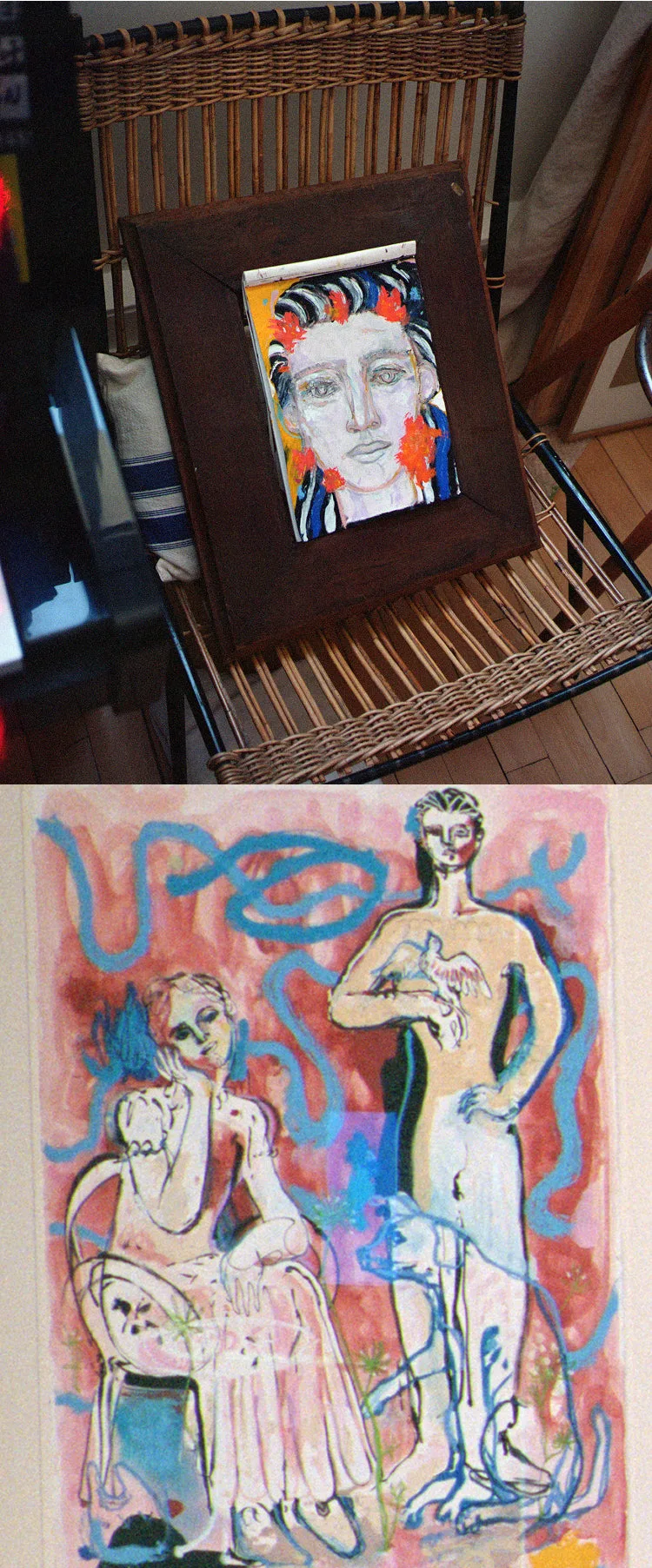
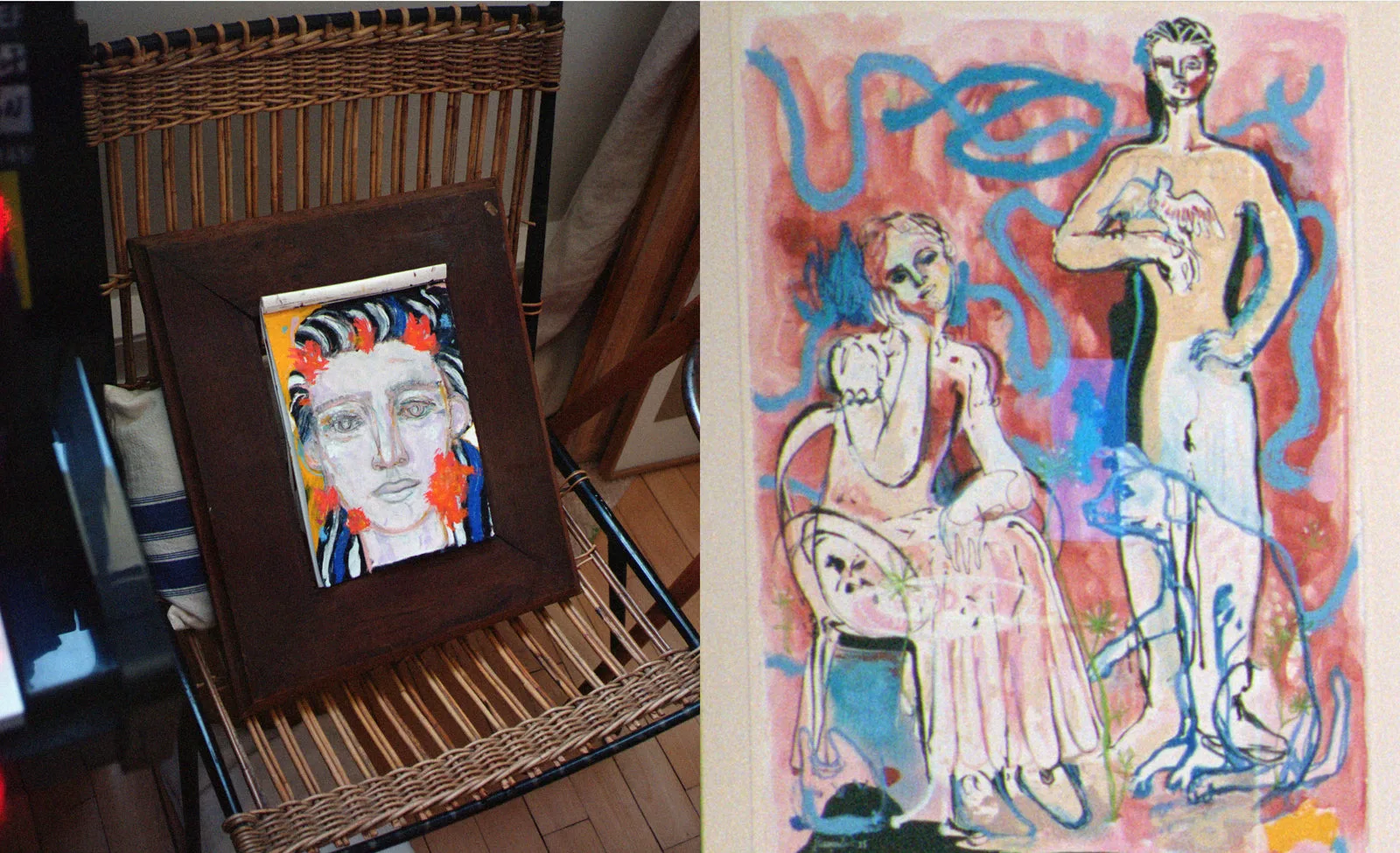
I try to translate tensions: between chaos and balance, strength and fragility. I accept contradiction, imperfection.
Simon Buret
JD: We also know you as the singer of the group Aaron. What made you want to paint? Did it come naturally or was it a real turning point in your life?
SB: I believe that it did not come as a turning point, but rather as a continuity. Painting and drawing have always been part of me. Even when I was deeply into music, there was this need, quieter, more intimate.
At some point, I just stopped containing it. It came naturally, but with an urgency too: that of transforming things that I couldn’t necessarily say with words or melodies.
JD: Which artists inspire you, whether in painting, music or elsewhere?
SB: I am inspired by those who dare to go where things shake. In painting, I was very influenced by Cy Twombly, Francis Bacon, but also by more contemporary artists like Marlène Dumas or Louise Bourgeois, in this relationship with the body and memory.
In music, it’s often voices or atmospheres that grab me, not a genre.
And then there is literature, poetry. Lately… Ritsos, Rumi, Bukowski. I read a lot. Words nourish images and thoughts.
JD: Do you start a painting with a specific idea in mind or do you let yourself be carried away?
SB: I look for the accident, the stain, the unexpected color that brings form. I start with a feeling — sometimes a very strong emotion, sometimes just an emptiness. But never with a clear idea or a plan. It’s the gesture that guides me, the material, the accidents. There's always a moment when I lose control, and that's often when it gets interesting.
I try not to intervene too much, to let the work find its own form. I have never finished a painting the way it was intended to be for me at the start.
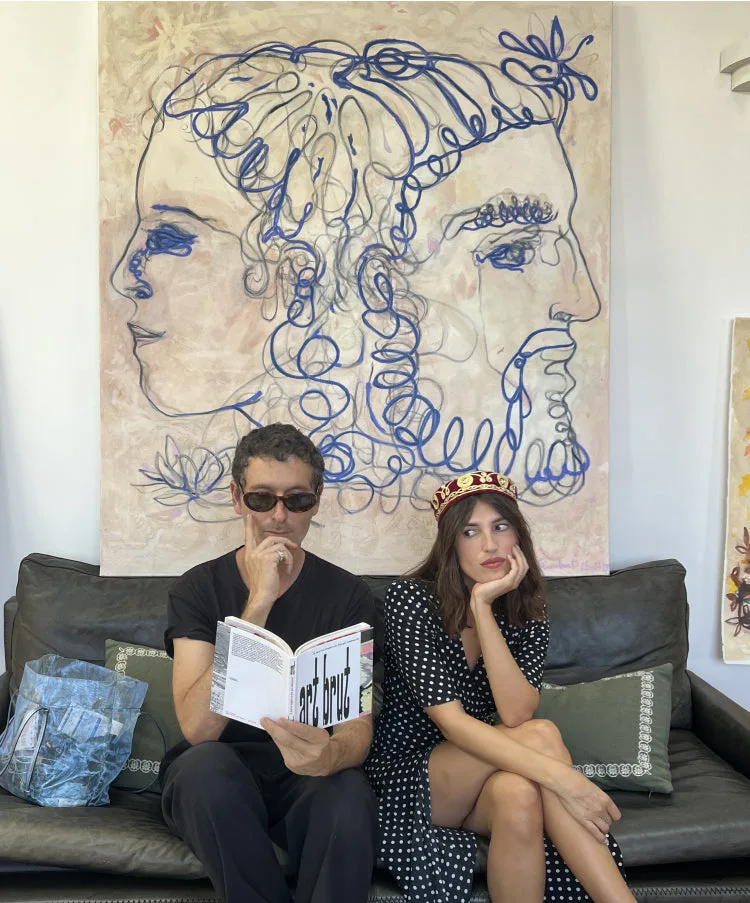
JD: Do your music and your painting speak to each other? Do you feel any connections between the two?
SB: I have always thought that a song is a soundscape, and that a pictorial work is a silent melody. The connection in me may be here.
So yes, even if they don't speak the same language. There is the same impulse, the same search for emotional honesty.
When I paint, I feel a form of rhythm. Sometimes I listen to music very loudly — it ends up in the painting itself. Sometimes I work in silence, but in both cases it is a form of intense presence. Like an inner prayer.
And then, there is this link to the body, to breathing. Ultimately, whether it is a note or a line, it is an attempt to say something that we do not always know how to formulate.
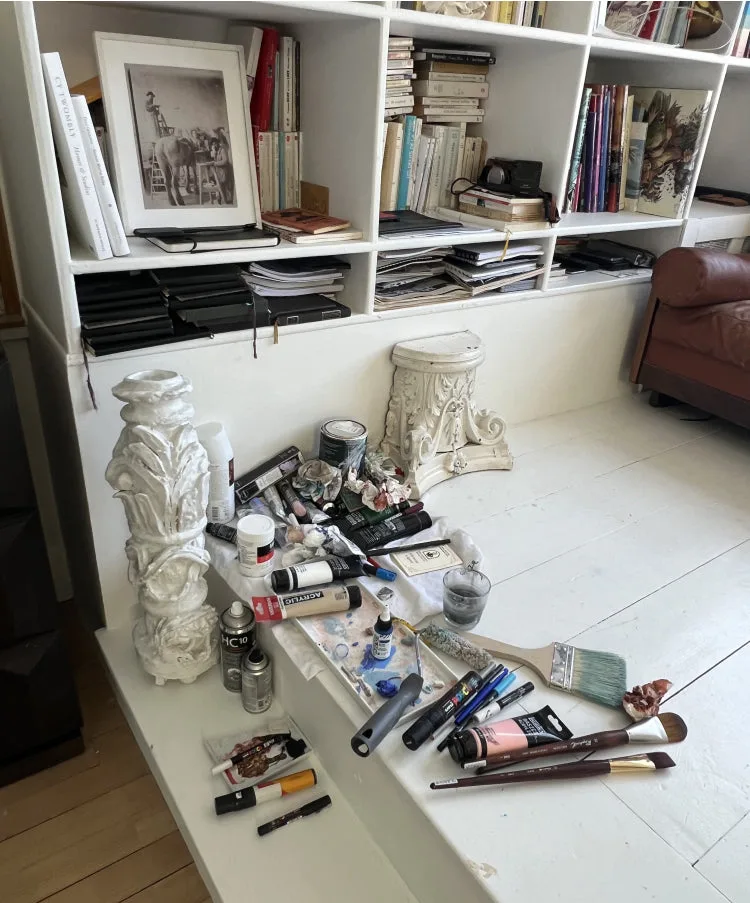
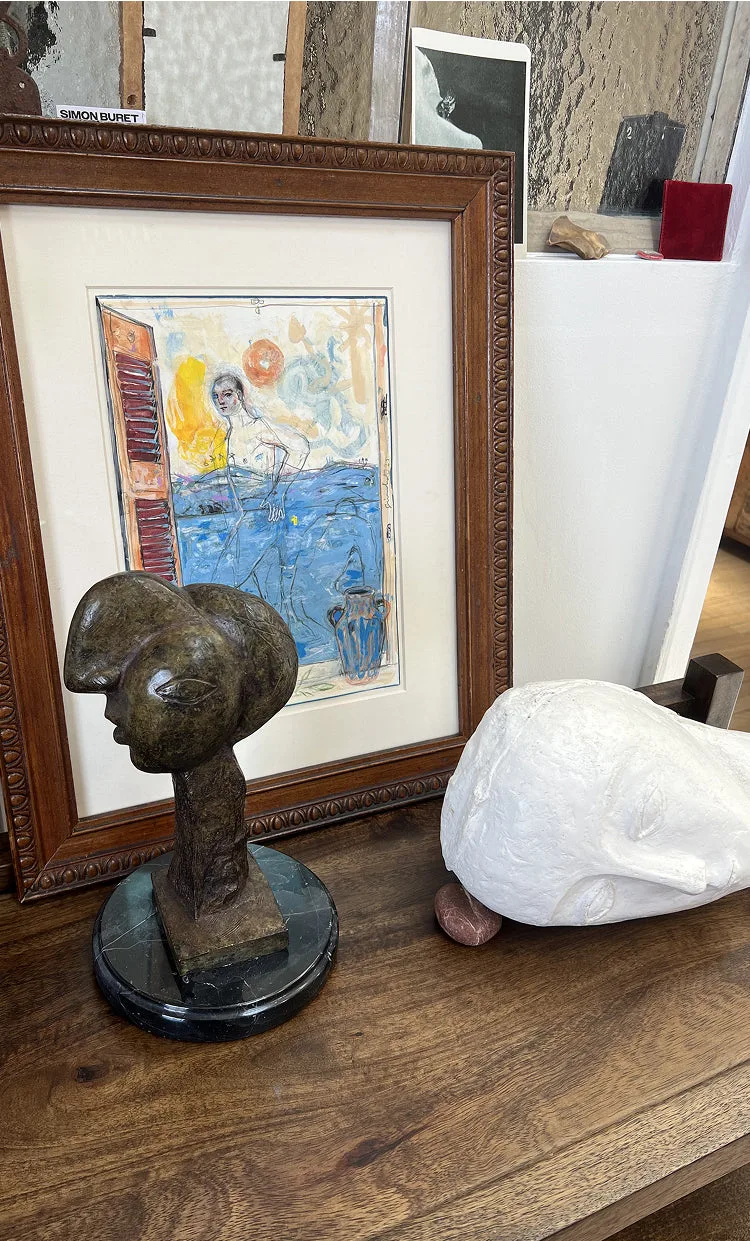
JD: I am very sensitive to your personal world. Your apartment is truly incredible! We feel that each object has a story, nothing is here by chance. Are there pieces that inspire you on a daily basis?
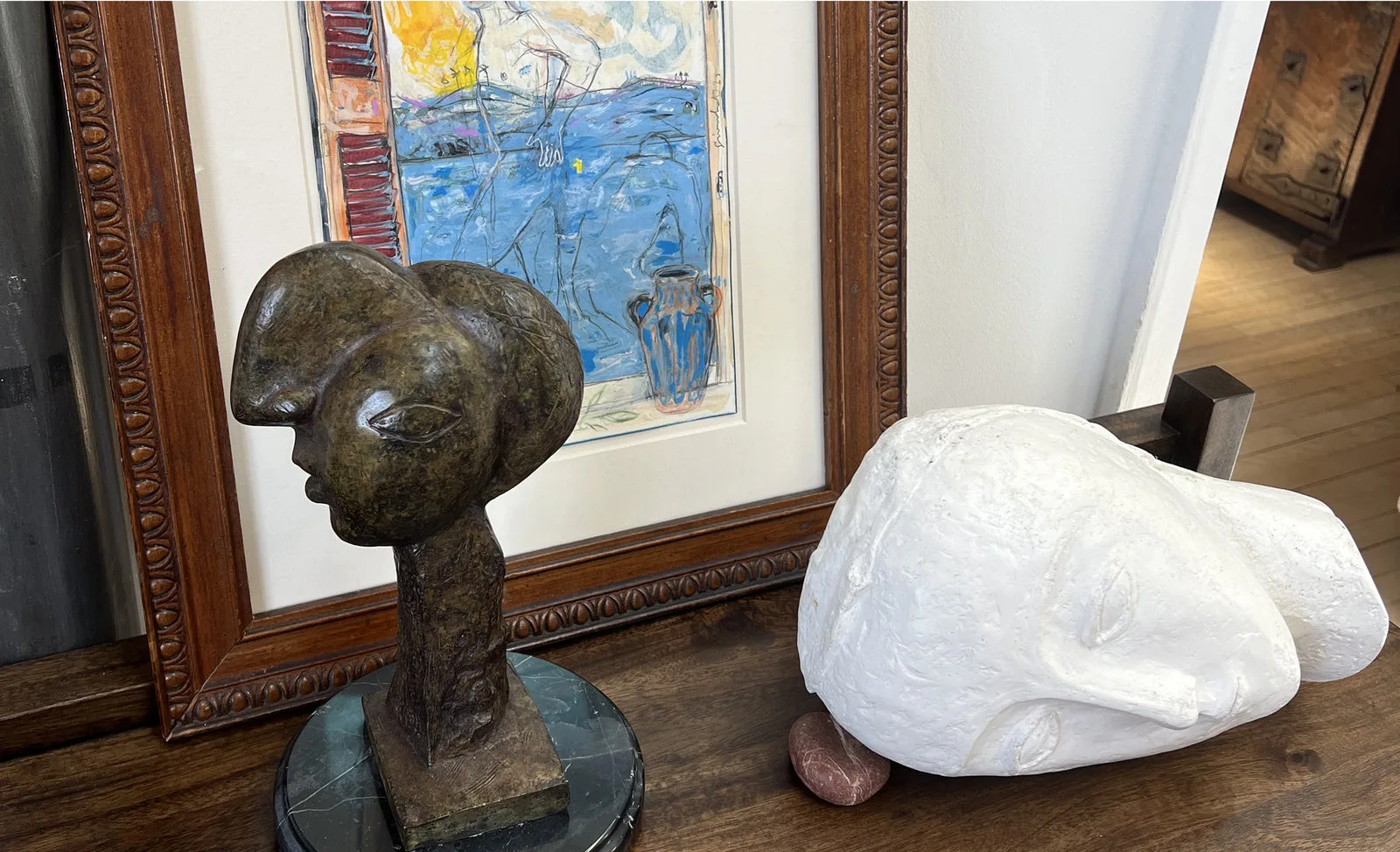
SB: Thank you, that touches me. I like objects to live, to carry within them a trace, a memory. They are often found in my painting — sometimes in details almost invisible to the eye, like talismans.
There are things that I brought back from trips (a lot), others that were given to me, some that I found. I also keep a lot…
Here, for me, a metro ticket brought back from Bangkok has as much value as a master painting, I think. Everything carries a poem. I work there and I love it.
They are like silent presences. I don't necessarily look at them every day, but they form an ecosystem around me. A place of anchoring and inspiration.
I like the idea of motionless travel, and the dogma of “the object with poetic reaction”. My workshop is full of them.
I have always thought that a song is a soundscape, and that a pictorial work is a silent melody.
simon buret
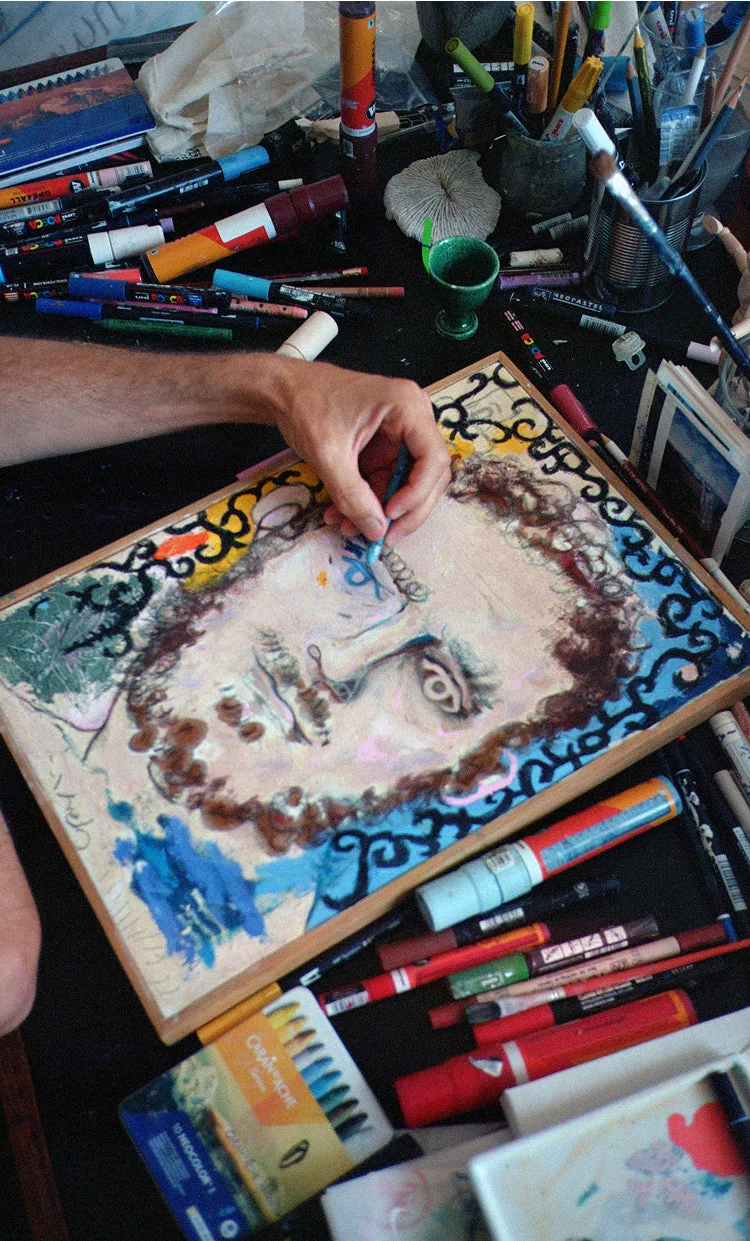
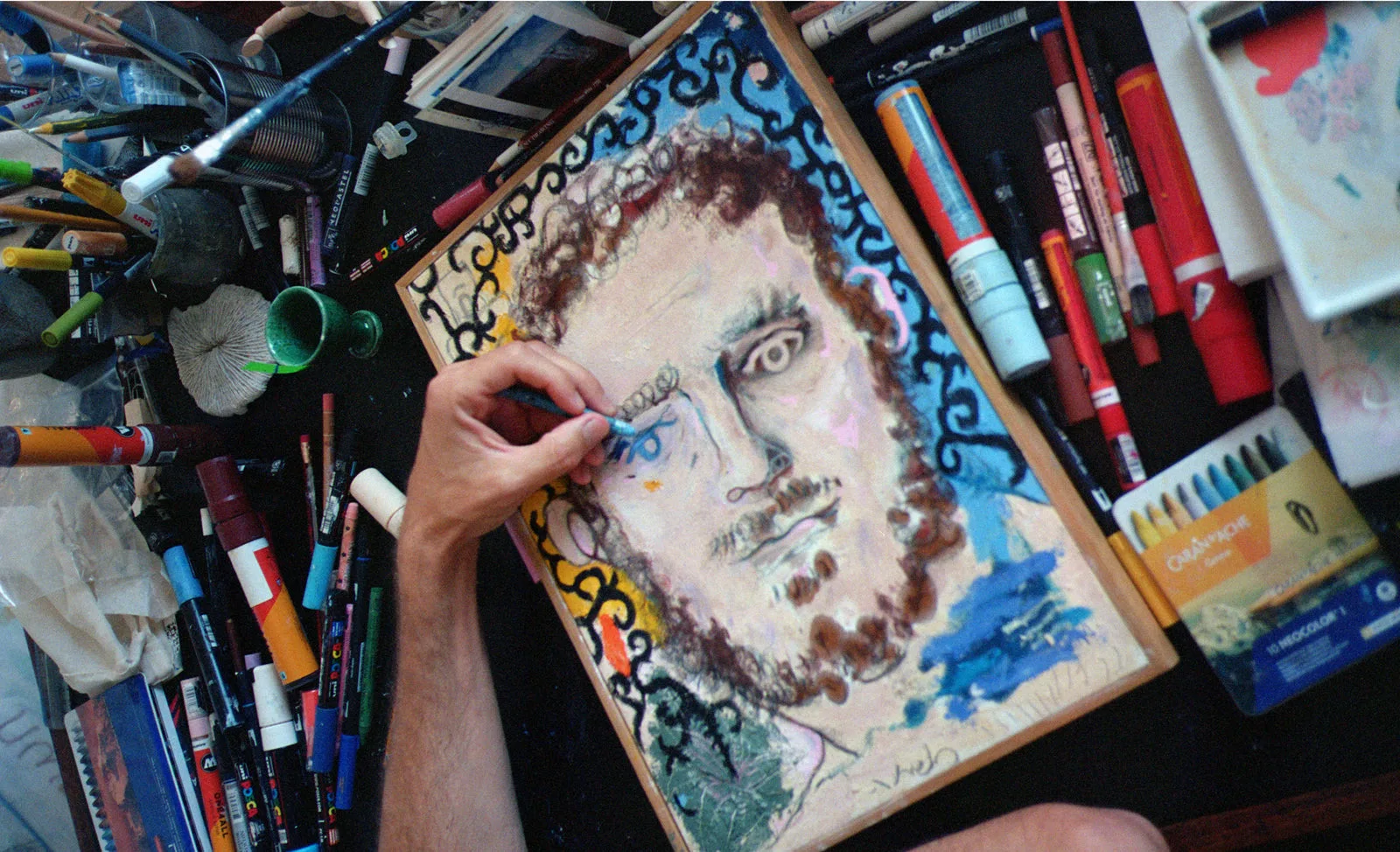
JD: Painting, for you, is it physical? Do you feel that in your body, a bit like on stage?
SB: Completely. It is sometimes even more physical than the stage, because I am alone facing the material, and there is no external adrenaline.
My body is involved, especially in large formats. I bend over, I stretch, I sweat. There is a form of dance, a very organic relationship. And then there is also emotional fatigue. When I have finished a painting, I am often empty.
JD: Do you feel like a painter as much as a musician today, or does painting remain more intimate for you?
SB: Today, I feel deeply artistic, without hierarchy between disciplines. Painting is perhaps more intimate, but no less essential.
It allows me to touch something quieter, slower. It’s a space where I can put things down without having to explain them.
I don't think I've ever needed this more.
JD: When you exhibit your paintings, do you feel the same as when you go on stage, or is it a completely different relationship with the audience?
SB: It's very different. On stage, there is the moment, the look, the immediate human warmth. It's alive, direct. Even if the energy is circular in the two "realms", a drawing, a canvas, once hung, no longer belongs to me in the same way. I'm not here to sing them anymore.
It speaks alone, it sings its melody to the viewer, independently. And it’s sometimes dizzying, letting people into such an intimate space. But it’s also very beautiful. An exhibition is a form of abandonment.
Also… we become public with our own mirror. I like to believe that a successful work is above all a mirror of the person facing it.
The medium doesn't matter.
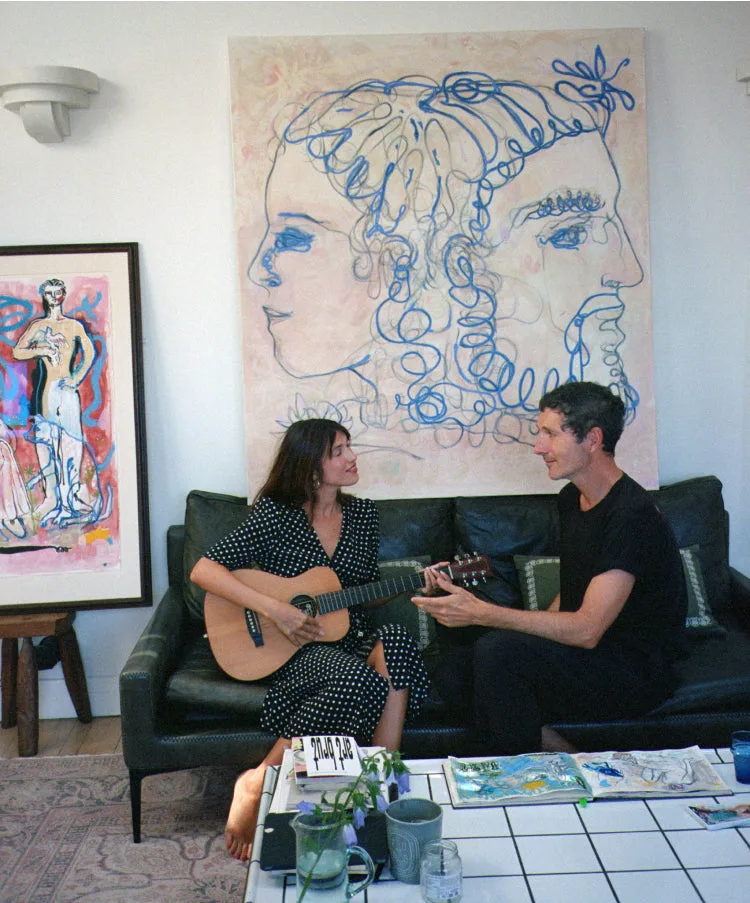
I like to believe that a successful work is above all a mirror of the person facing it. The medium doesn't matter.
simon buret
MORE ARTIST ROOMS