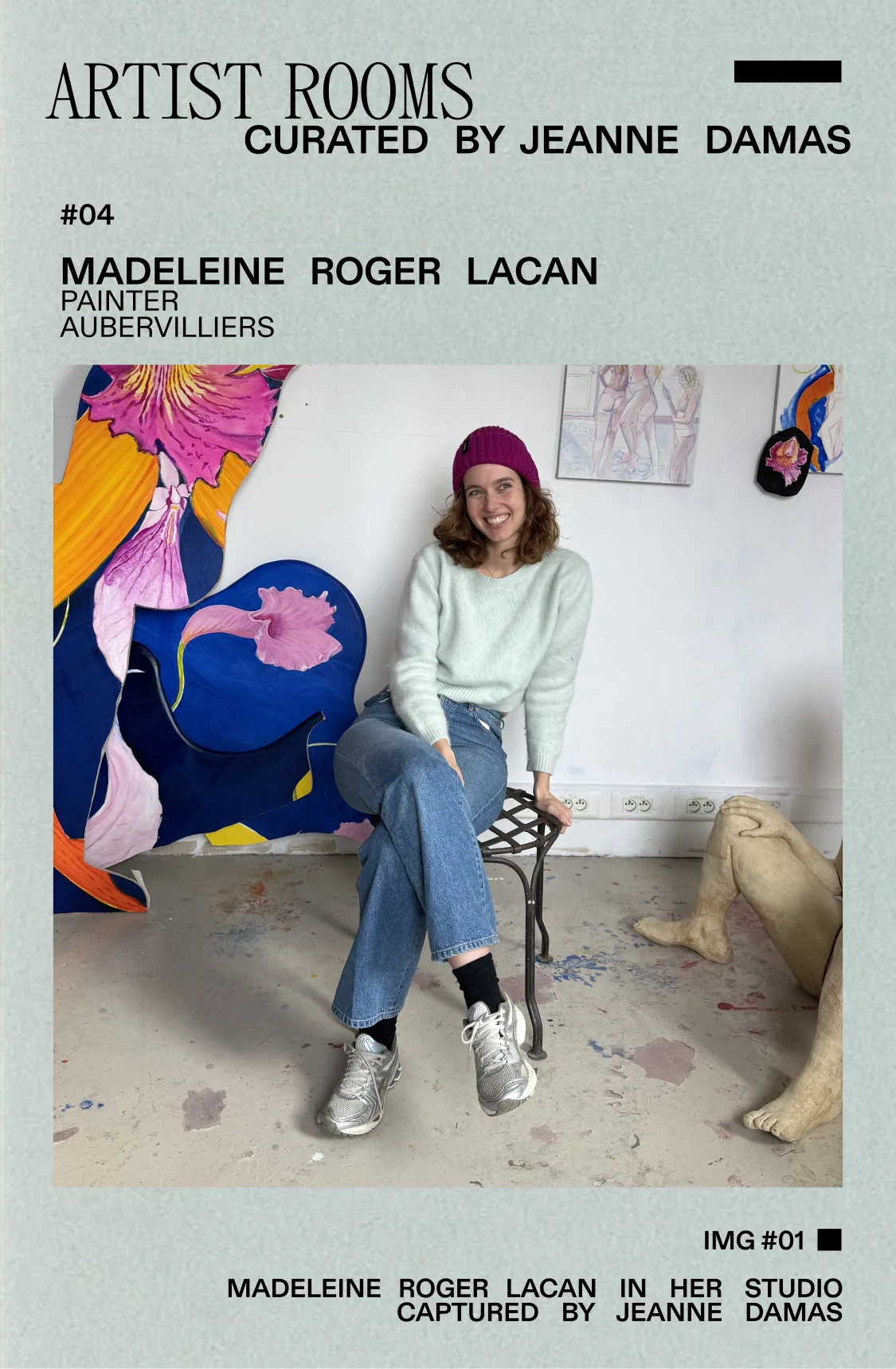
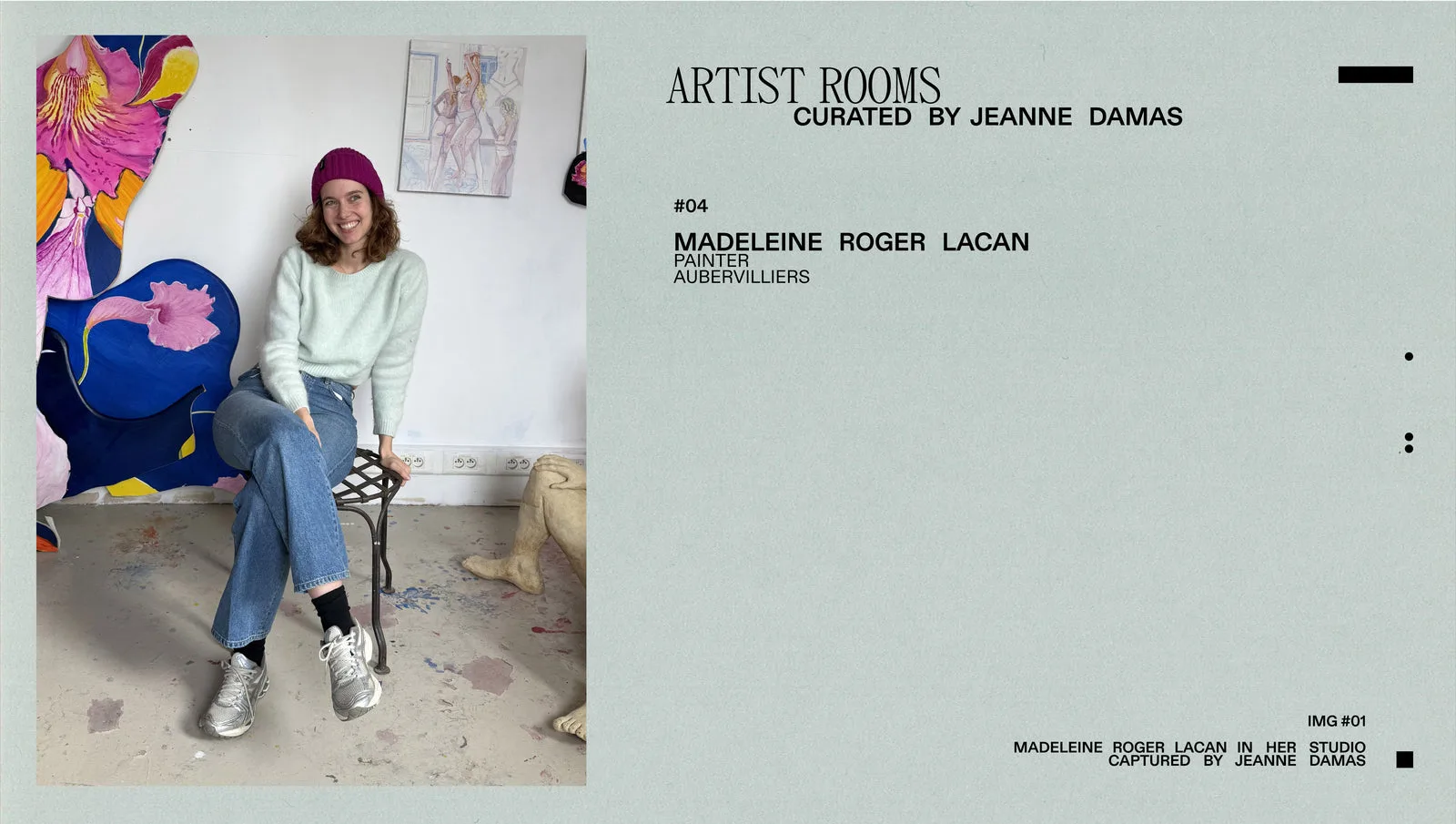
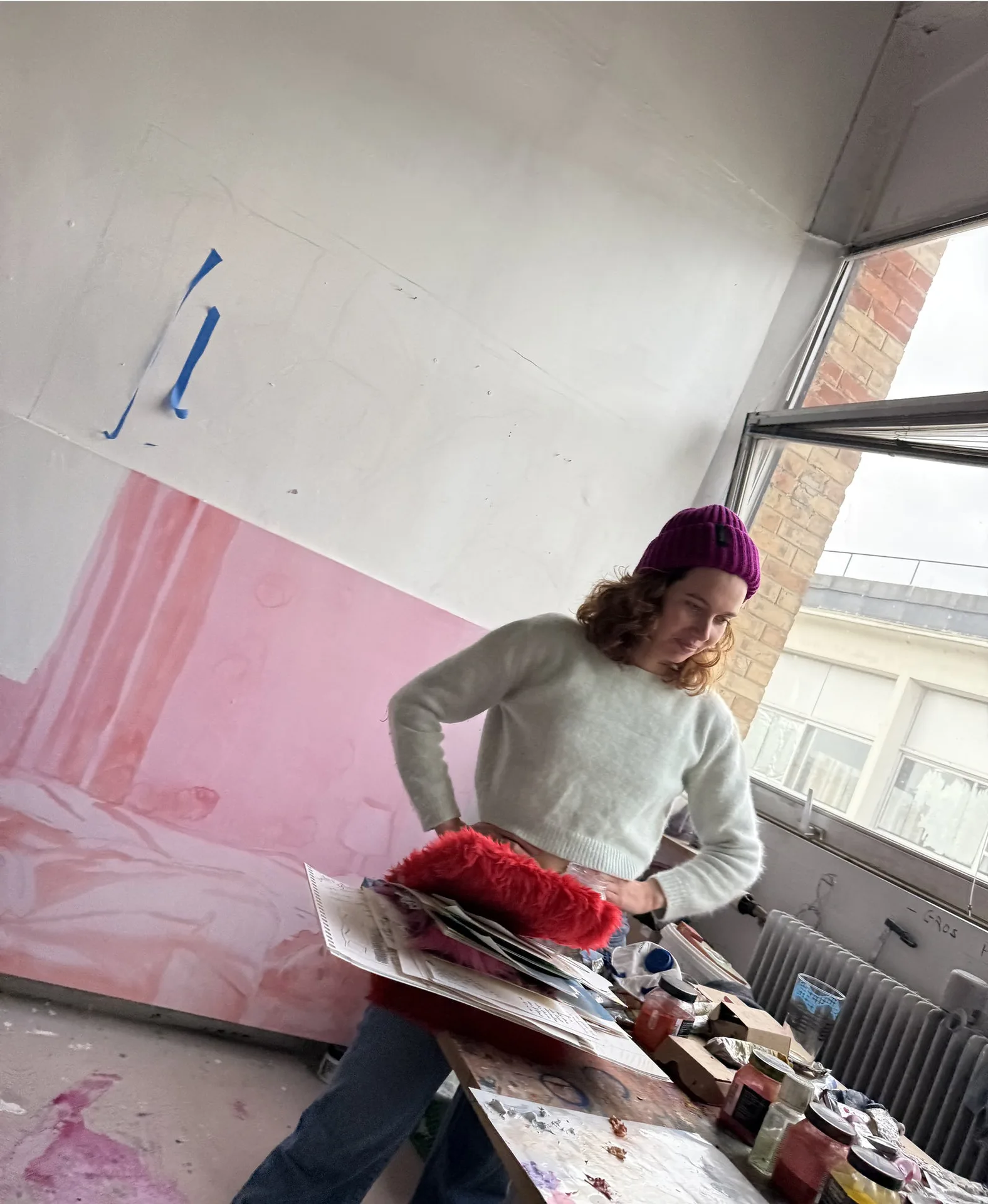
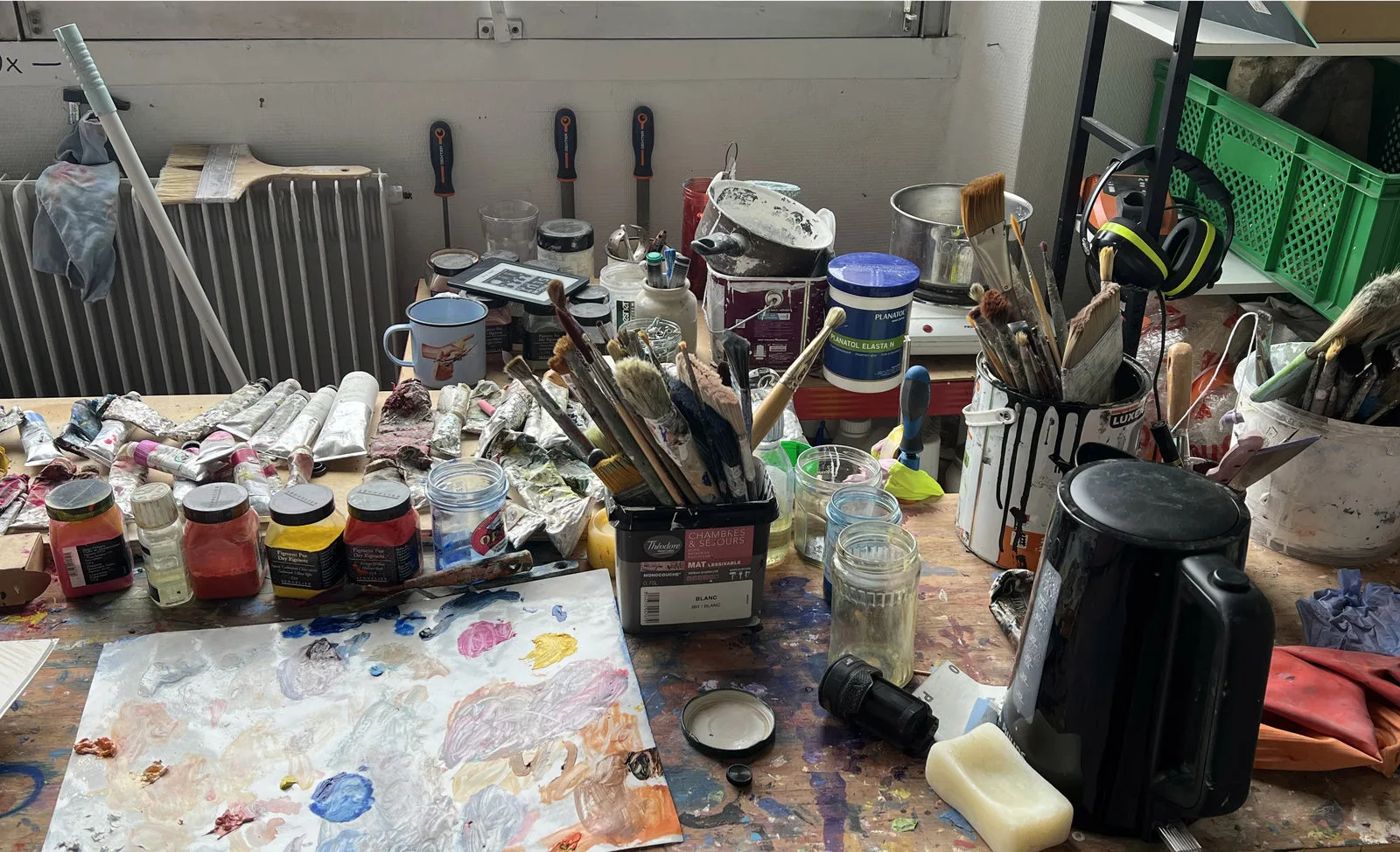
Madeleine Roger Lacan is a painter based in Paris. A graduate of Beaux-Arts in Paris, she is preparing a group exhibition for the Center Pompidou Metz this summer and a personal exhibition in Paris for October. Jeanne Damas met her in her workshop in the Poush collective.
INTERVIEW
JD: The first question I often ask is just to talk about your beginnings. How did you start? Do you come from a family of artists or is this something you developed on your own?
MRL: My father is in theater and cinema, so I grew up in that environment.
JD: And did your mother work in her workshop?
MRL: Yes, she is an artist. She does sculpture and painting.
JD: Okay. She started with textile design, right?
MRL: Yes and when she became pregnant with me, she decided to go to the Beaux-Arts in the city of Paris. She has since developed her artistic work. We talk a lot, she is very inspiring.
JD: Did she study Fine Arts too?
MRL: Not exactly, she followed the Ateliers de la Ville de Paris. At the time, there was an age limit for entering Fine Arts, so she was too old to enter.
JD: Okay, which is no longer the case today.
MRL: No, indeed.
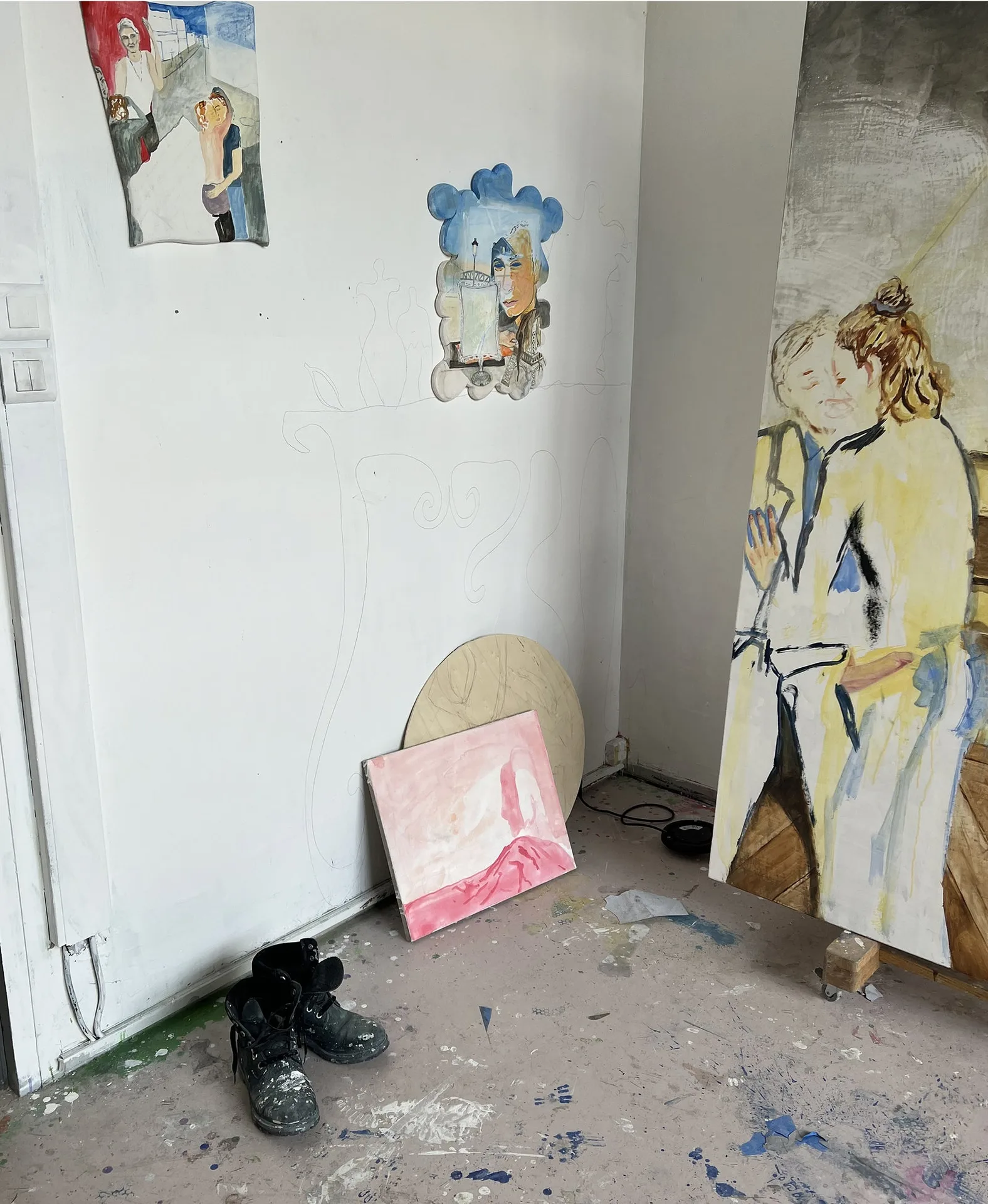
"I had great anxiety about the choice of life, about the passage of time, about knowing where to invest my energy. And with painting, all of a sudden, it all had meaning. All my passions - research, science, literature, history, aesthetics - were found in painting."
Madeleine Roger Lacan
JD: And when did you have your first memories of painting?
MRL: I think my mother started me by making me paints as Christmas presents. Otherwise, I drew a lot with markers when I came home from school.
JD: Was that your means of expression?
MRL: Yes, a space of freedom.
JD: And in high school, were you still on this path?
MRL: Not at all.
JD: You didn’t necessarily see yourself making a career out of it?
MRL: No, I also saw behind the scenes. I was aware of the loneliness and frustration that can accompany this job. And then, I was a good student. I studied at Henri-IV, so I was more inclined towards more classical studies.
JD: Did you have this pressure to succeed academically?
MRL: Yes, it was a bit vain.
JD: When did you change direction?
MRL: At 16, I went to art school in the United States for the summer. It was a summer school and I discovered oil painting. These are memories of the strong. But at that time, I didn't dare to plan on this path: it was as if it was too much fun and not my idea of "serious" work.
JD: Finally, did you pursue academic studies?
MRL: No, I passed my baccalaureate, but I did not obtain the preparatory courses that interested me. At the same time, I registered at the Ateliers de Sèvres.
JD: Did you send your file without really believing in it?
MRL: Yes, a little. Many of my friends didn’t understand why I was considering this. But during the summer, I went to Italy, saw a lot of paintings, read about the history of art and the path became obvious. I told myself that I was not going to do business prep, but rather give art a chance.
JD: Is that when you started painting every day?
MRL: Yes, at the Ateliers de Sèvres, to prepare for art school competitions. I had great anxiety about choices in life, about time passing, about knowing where vital energy is going. And with painting, suddenly it all made sense. All my passions – research, science, literature, history, aesthetics – were found in painting.
JD: So everything aligned at that point?
MRL: Yes, but with its share of anxieties and doubts. It was not an obvious path.
JD: And after that, you joined the Fine Arts?
MRL: Yes, I stayed there for five years.
JD: Did it go well?
MRL: Yes, the most important thing is that I met Christine Safa, Nathanaëlle Herbelin, Elené Shatberashvili, Cecilia Granara, a whole group of artist friends, which is precious.
“For me, to paint without an emotional message is to risk making a simple beautiful canvas, devoid of substance.”
Madeleine Roger Lacan
JD: And after Fine Arts, how did the rest go?
MRL: I did an exchange in London, which was very important for me. At the Beaux-Arts, I had acquired technical foundations, but I had the impression that I had not yet put my guts into painting. In London, I was able to explode, in an environment that had less expectations of “beautiful” and “well done”.
JD: Was London also an art school?
MRL: Yes, the Slade School of Fine Art.
JD: There are more art schools in London, right?
MRL: Yes, it is, and it is a very stimulating environment. My job completely changed there.
JD: Is that where you found your main lines, particularly on sexuality, surrealism, the imagination of your work?
MRL: Yes, there is an English fantasy, with colors and an exuberance that inspired me.
JD: Are these themes that already interested you before or that you developed there?
MRL: I think it was in me, but London helped me explore it fully. Leaving Paris also liberated me. Here, I sometimes had a feeling of claustrophobia.
JD: It’s clear. Other cities like New York can also be very inspiring.
MRL: Yes, completely. I was able to find a more visceral relationship to painting there.
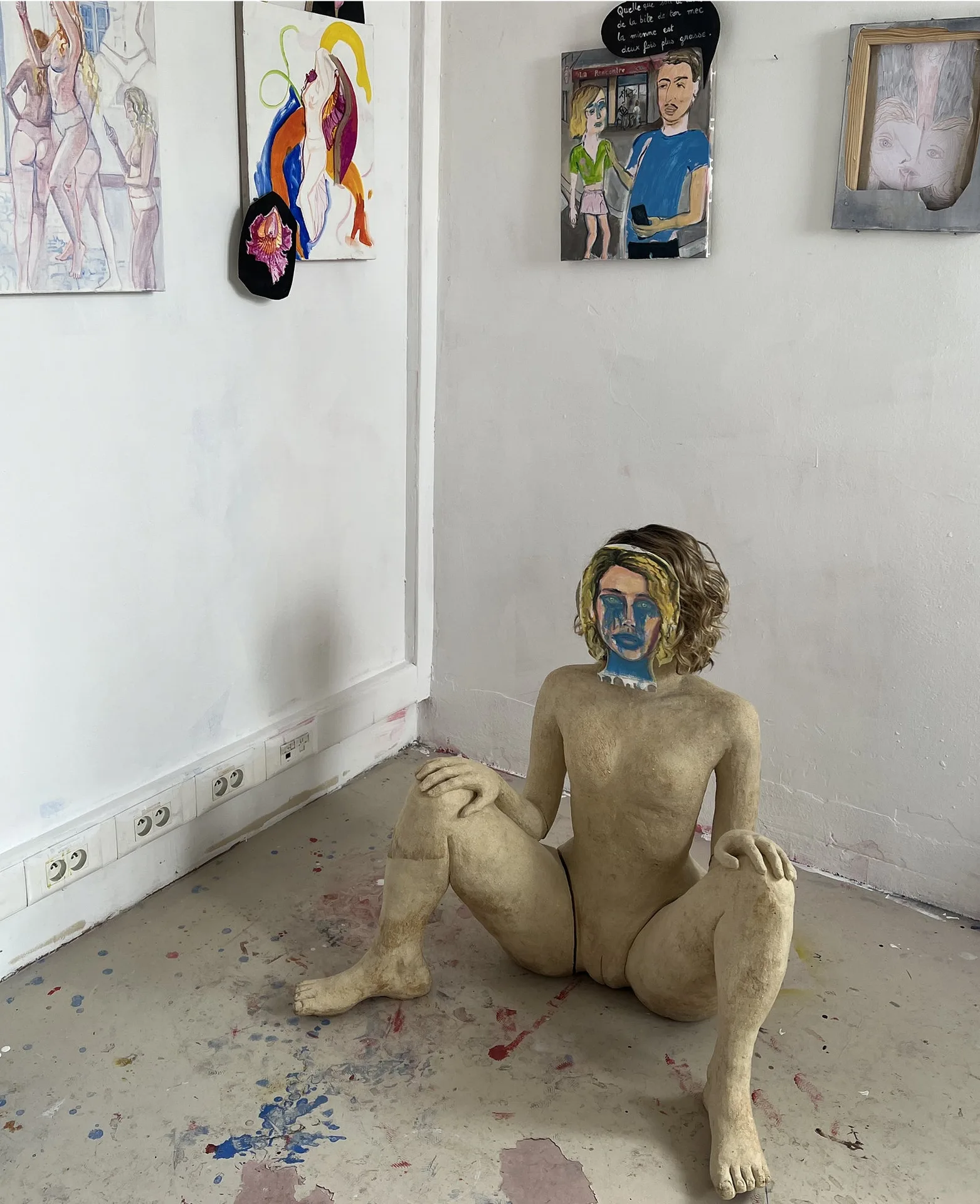
"My work is really centered on emotion. I can't start a piece without something strong inspiring me."
Madeleine Roger Lacan
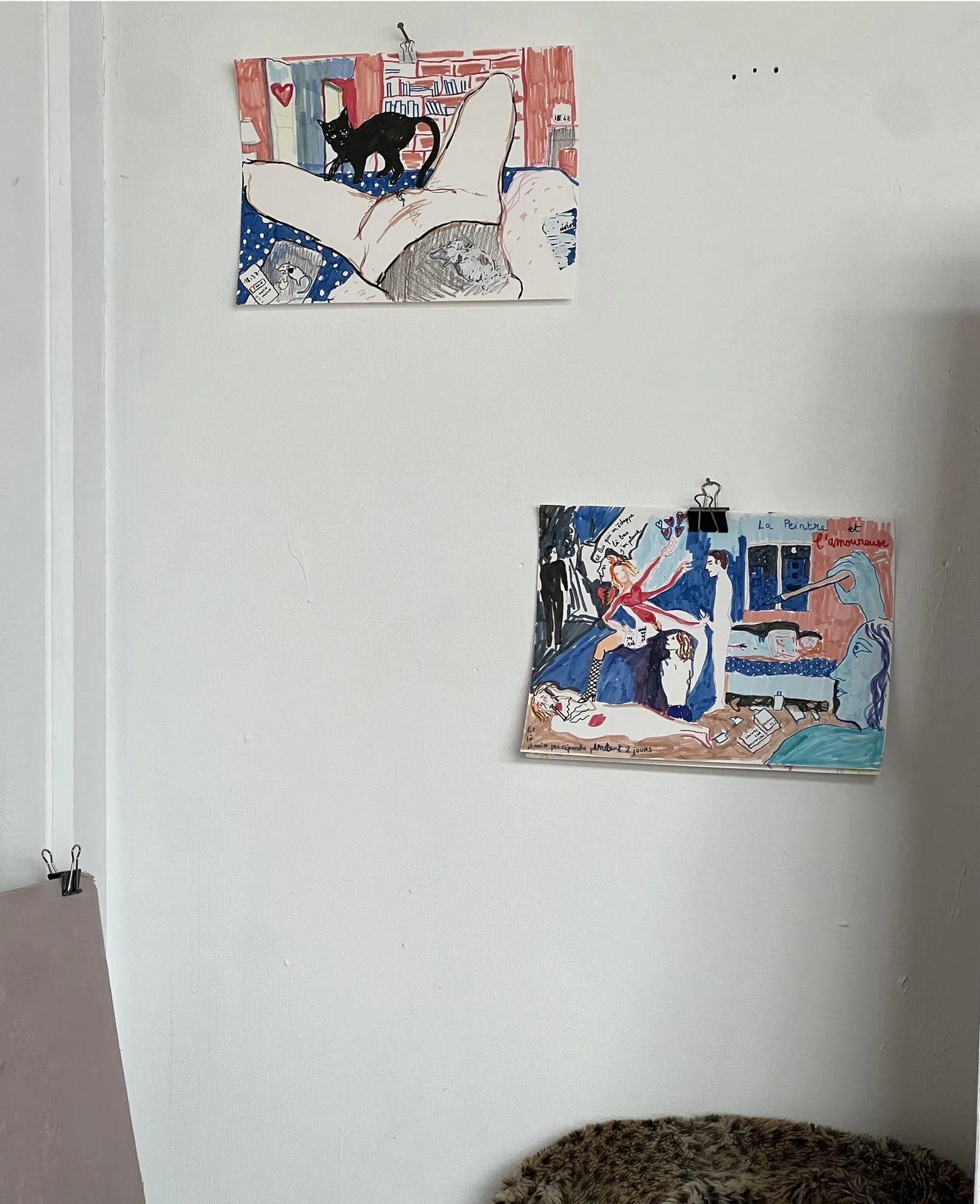
JD: And as far as your work is concerned, it revolves a lot around sexuality, and particularly female sexuality. It's quite rare, especially coming from a woman in the painting world today. Where does this impulse come from?
MRL: I think a lot of it comes from meeting visual artists, like Tracy Emin, for example. She's an incredible English artist that I discovered in London. Besides, she has a retrospective in Florence at the moment, entitled "Sex and Solitude". The title echoes what I'm looking for at the moment.
JD: It’s interesting, indeed. The idea of this link between desire and solitude resonates. And you mentioned that you drew inspiration from other artists, and not just contemporary ones. Do you have older references that have had an impact on you, like Léonor Fini?
MRL: I also think of artists like Dorothea Tanning who oscillates between painting and sculpture, who constructed a total universe. There is also Pierre Klossowski, the brother of Balthus, with whom I had the chance to do a duo show this year. His work embodies fantasies, they are large colored pencil drawings, and he gave me the courage to explore these themes myself.
JD: So you really see your work as a diary?
MRL: My work is really centered on emotion. I can't start a piece without having experienced what I'm talking about. If it's not necessary, I'm not interested. For me, painting without a question to resolve is to risk making a simple beautiful canvas, devoid of substance.*
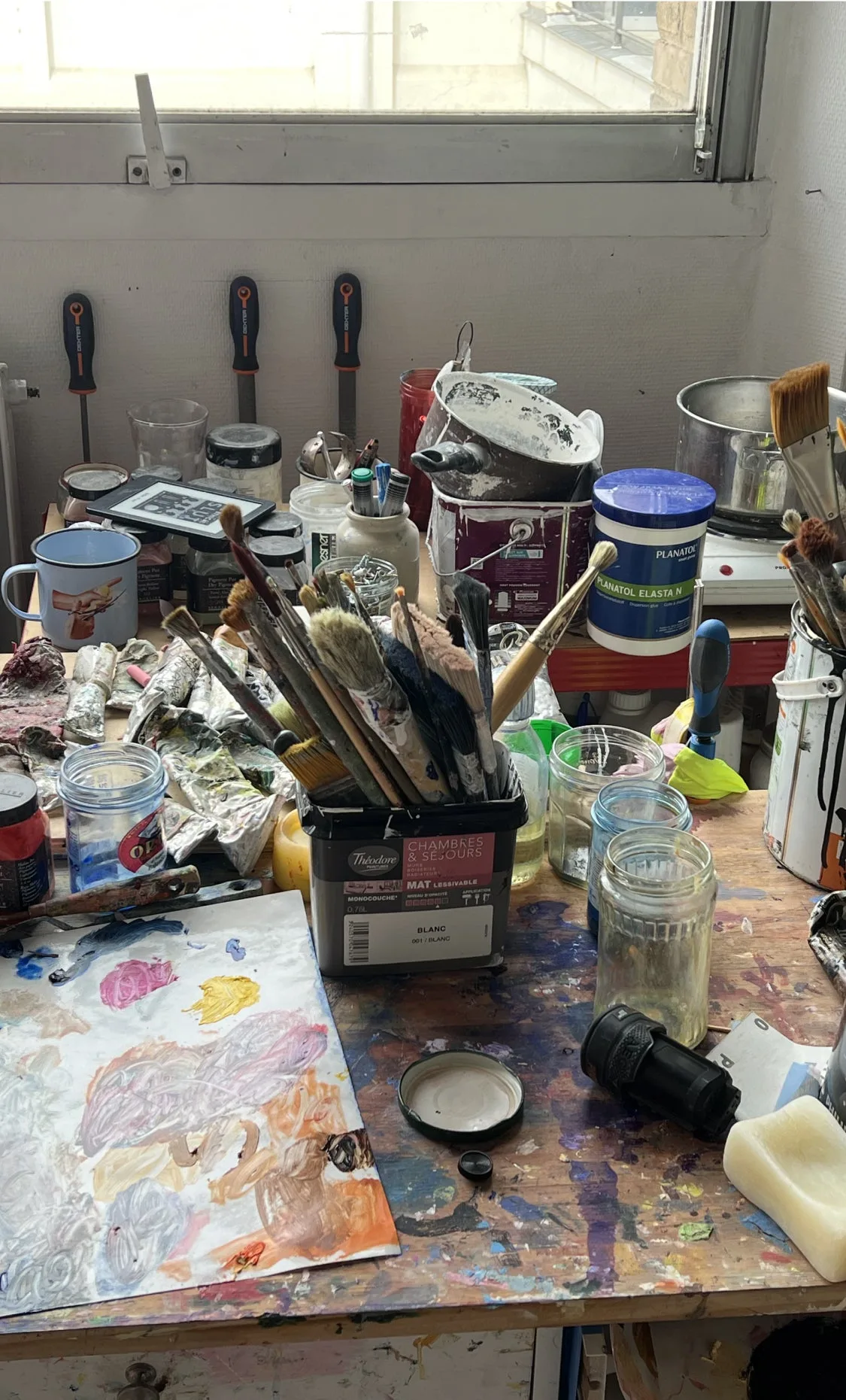
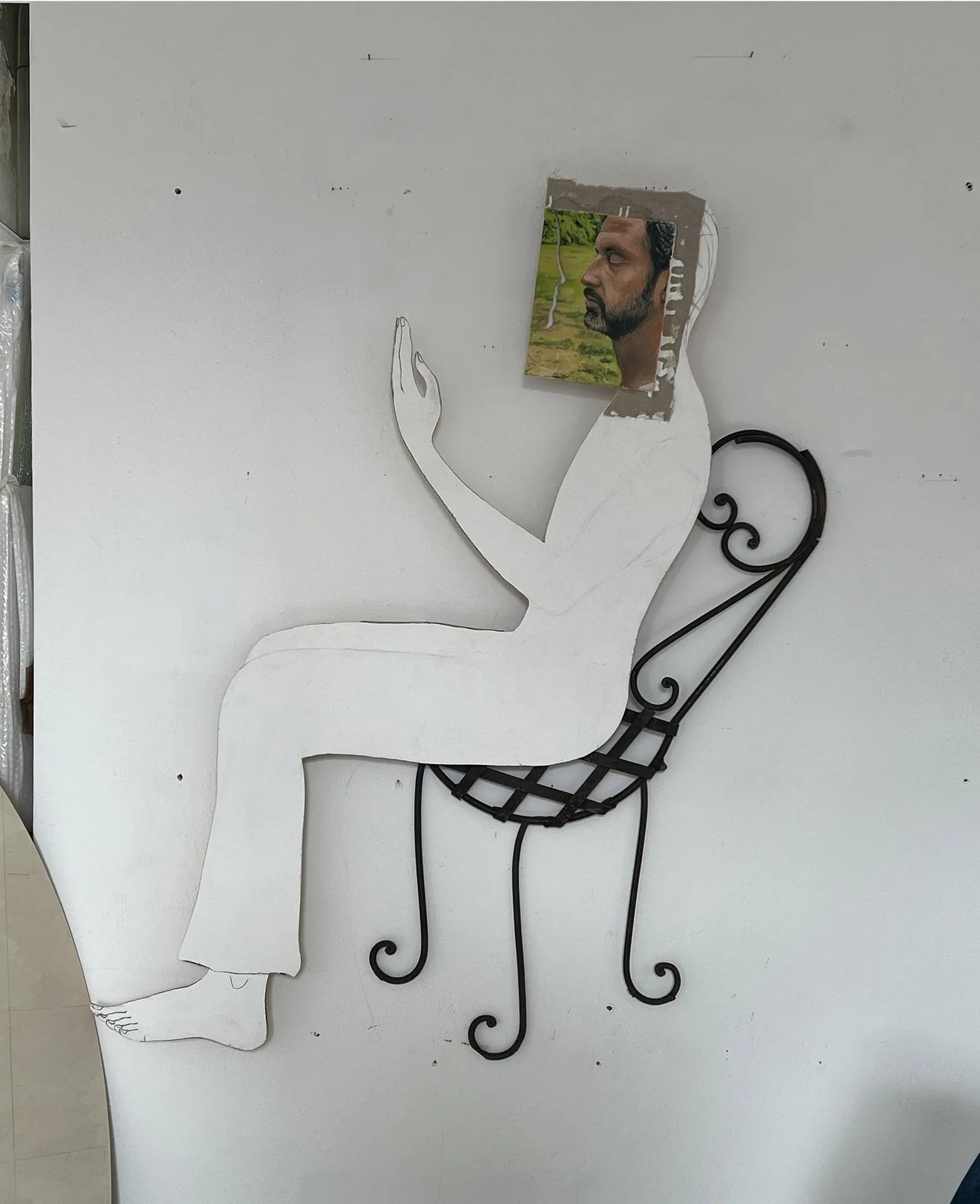
JD: That’s what makes the strength of your approach. Speaking of singularity, your way of working with formats is very personal, far from conventions. How do you choose your cuts and perforations?
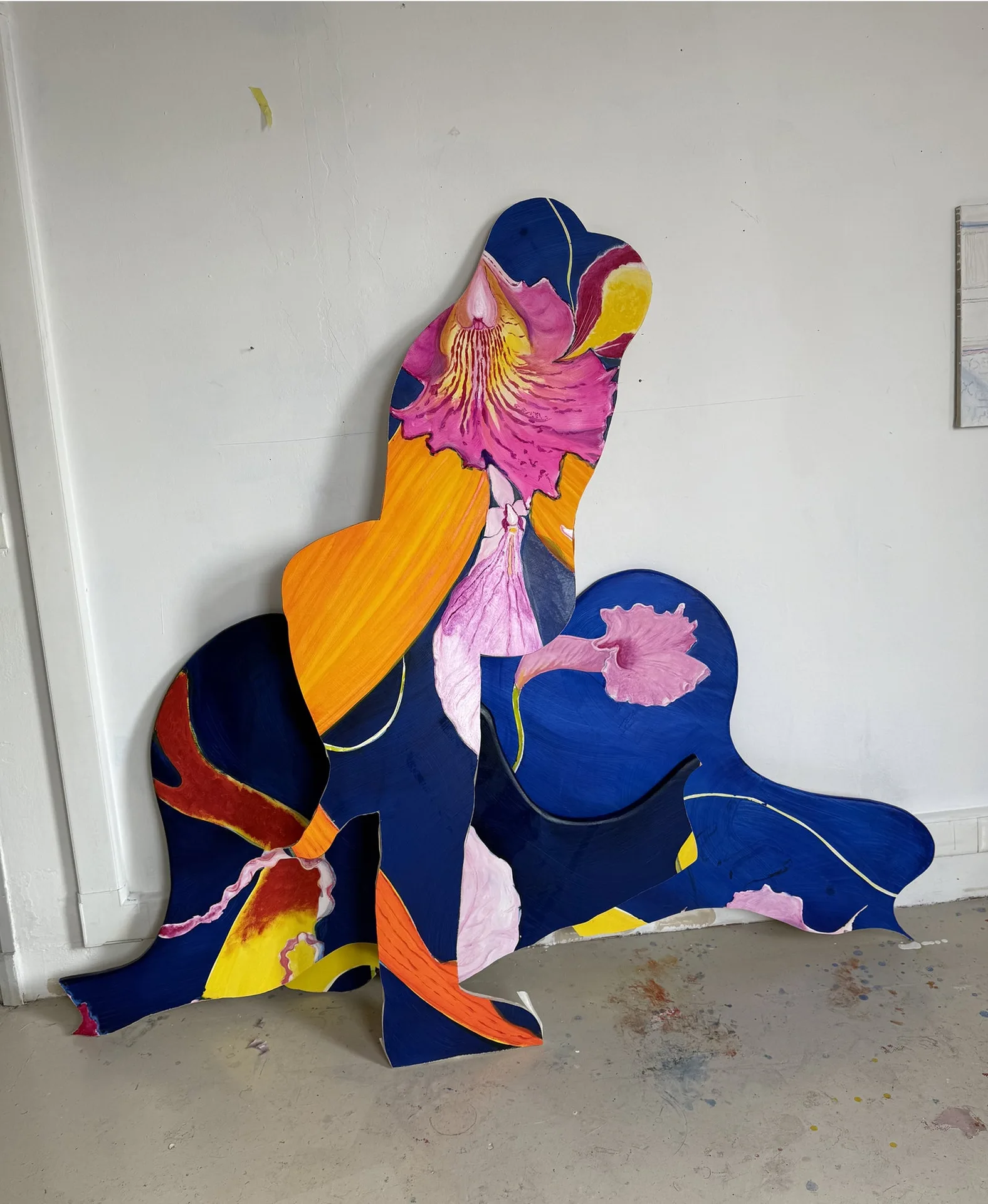
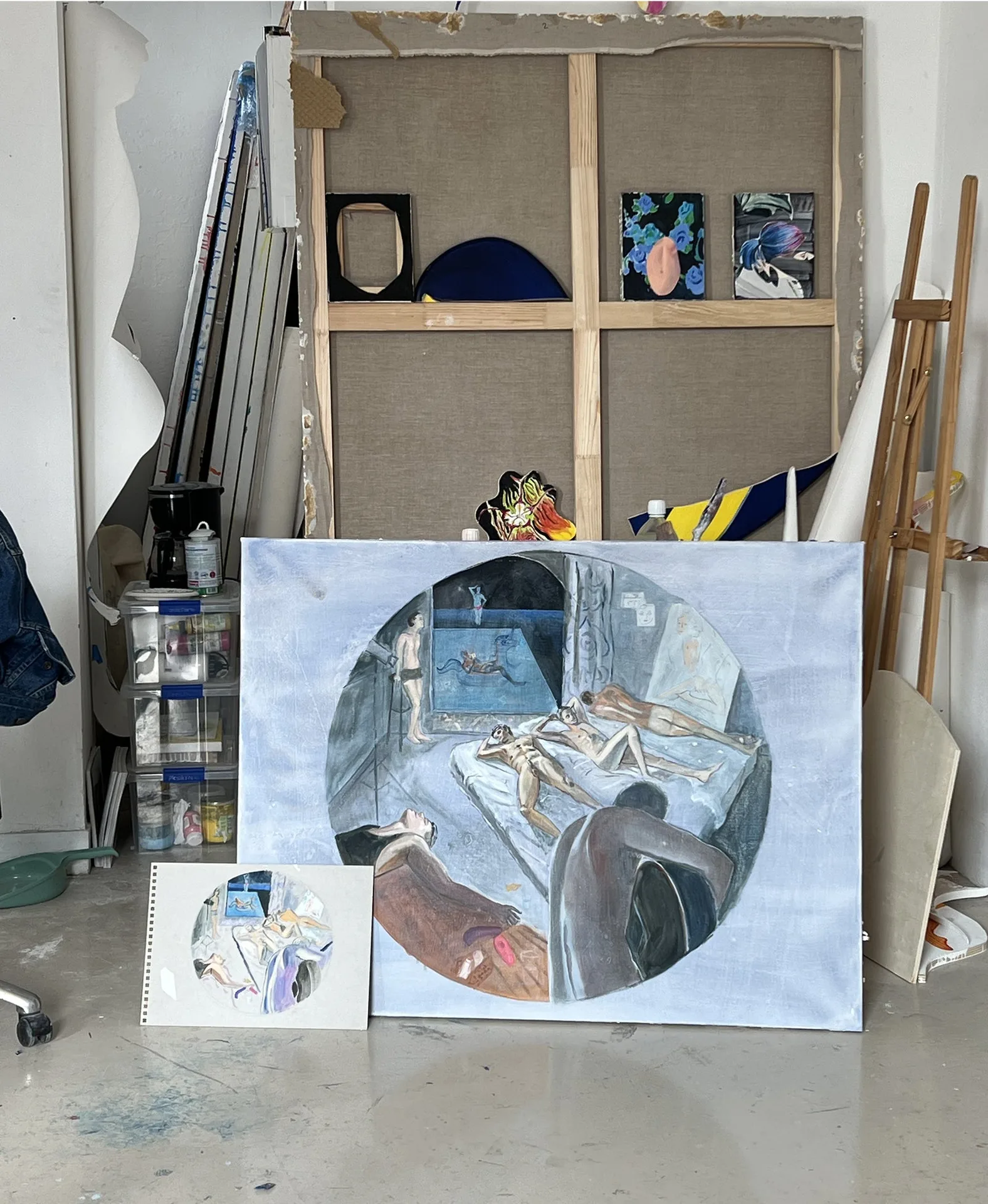
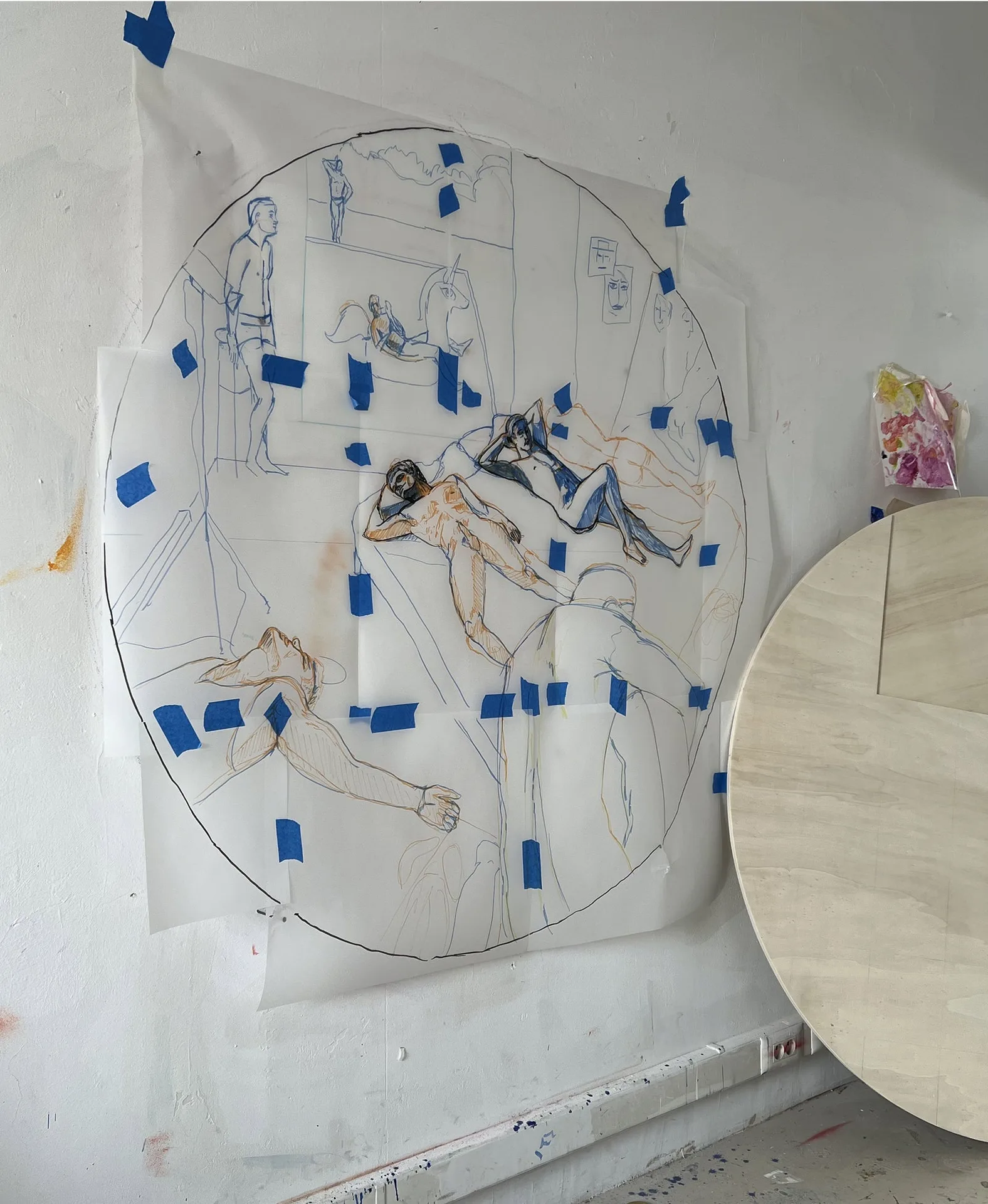
MRL: It’s all very instinctive. When I was at art school, I quickly used collage to compose my paintings. It clicked during a discussion with an artist at the Beaux-Arts, Jean-Michel Alberola. At a time when I was feeling artistically blocked, he encouraged me to stop wanting to "respect the canvas" and embrace a more chaotic essence that was emanating from the state of my workspace. This allowed me to realize that the canvas, beyond its frame, is a living material with immense potential.
JD: Okay, so you advocate a more raw and authentic approach, rejecting the illusion often associated with traditional painting.
MRL: It’s more complex than rejection. I feel this need to deconstruct this illusion while being fascinated by these realistic questions. Painting is a field of exploration.
JD: Speaking of exploration, you're starting to gravitate towards sculpture, right?
MRL: Yes, it was a turning point for me, inspired by Isa Gensken, a German artist whom I discovered during a retrospective in Berlin. His punk approach and his assembly of shapes moved me. She gradually moved away from minimalist norms to create something more organic and daring.
JD: That must be a great discovery! Do you have an upcoming exhibition project?
MRL: Yes, I am preparing an exhibition entitled "Copiste" for the Center Pompidou Metz, which will take place in June, shortly before the Basel fair where I will also present some of my new works.
JD: And do you have other projects in sight?
MRL: There is also a solo show planned with Philippe Jousse for October. I'm still working on it.
more artist rooms