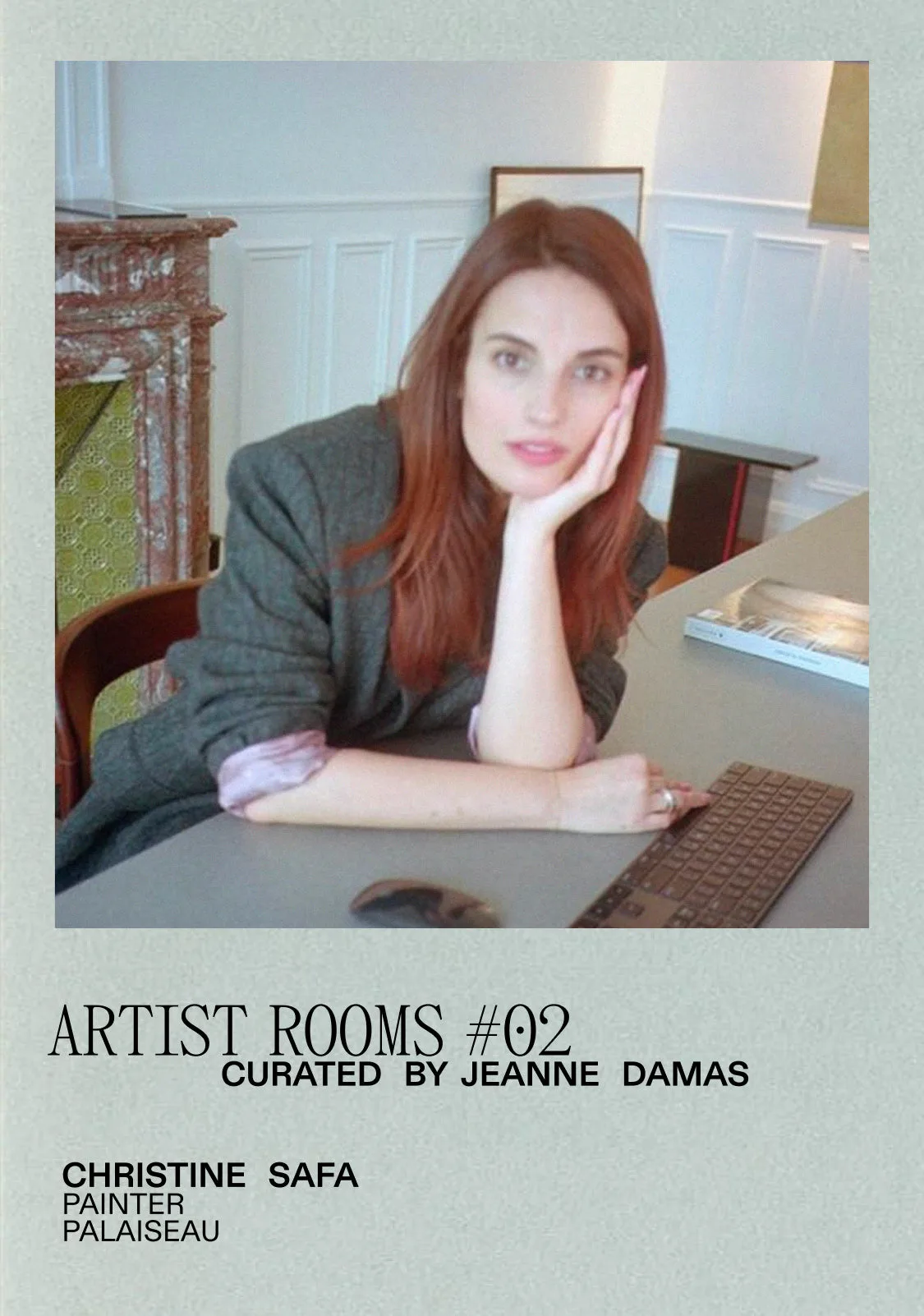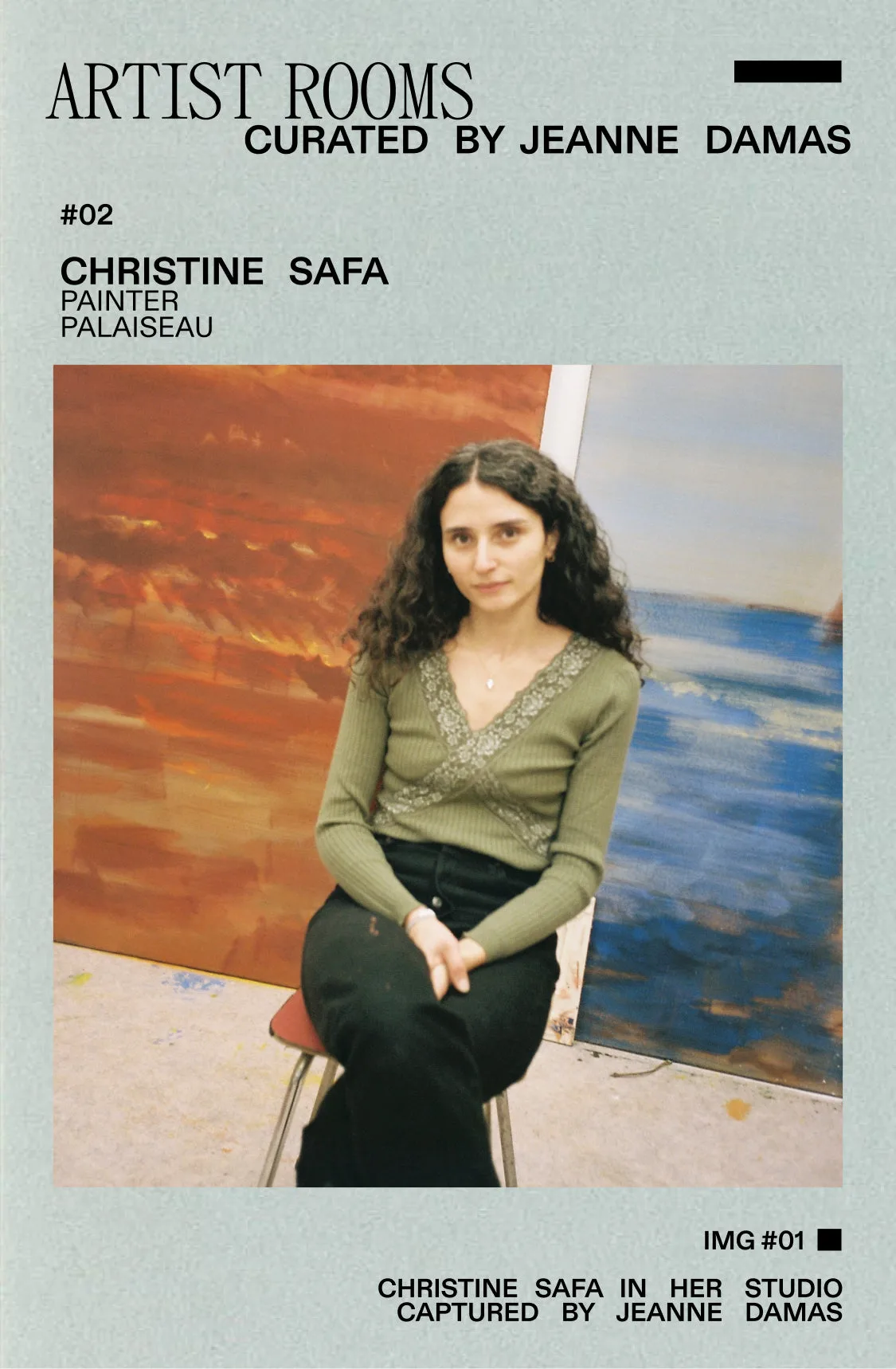
Jeanne Damas meets the French painter of Lebanese origin Christine Safa in her studio in the Paris suburbs. Winner of the prestigious Jean-François Prat 2025 prize, Christine recently showed her emotionally charged paintings in New York and at the Musée d’Orsay during Painters’ Day.
INTERVIEW
JD: Your work talks a lot about the intimate, your travels or your memories: it’s something that touches me a lot. How did you start painting?
CS: I think I've always been painting, at least since childhood. Whenever I had time to do something other than study, I would paint and draw.
JD: In Lebanon?
CS: I was born in France and grew up in the Paris suburbs. I went to Lebanon four times a year, almost every vacation. I spent a lot of time there. Like all children, I was given pencils to keep me busy. I drew all the time. Later, I did not have any pressure from my parents to do anything in the way of studies. They just said; do your baccalaureate and then you will see what you like.
JD: Are your parents artists?
CS: My father is in insurance, my mother trained as a specialized educator. They're not in the art world at all. In Lebanon I may have an aunt or two who love art, but it's not something
that was really passed on to me. On the other hand, there are a lot of religious images, a lot of statues of the Virgin, and icons in Lebanon. There are also a lot of ruins, which must have shaped me in a way. Even today, I like looking at the remains, the ancient civilizations of the Middle East.
After the baccalaureate, I wanted to prepare for art schools. This allowed me to attend the Beaux-Arts de Paris for five years.
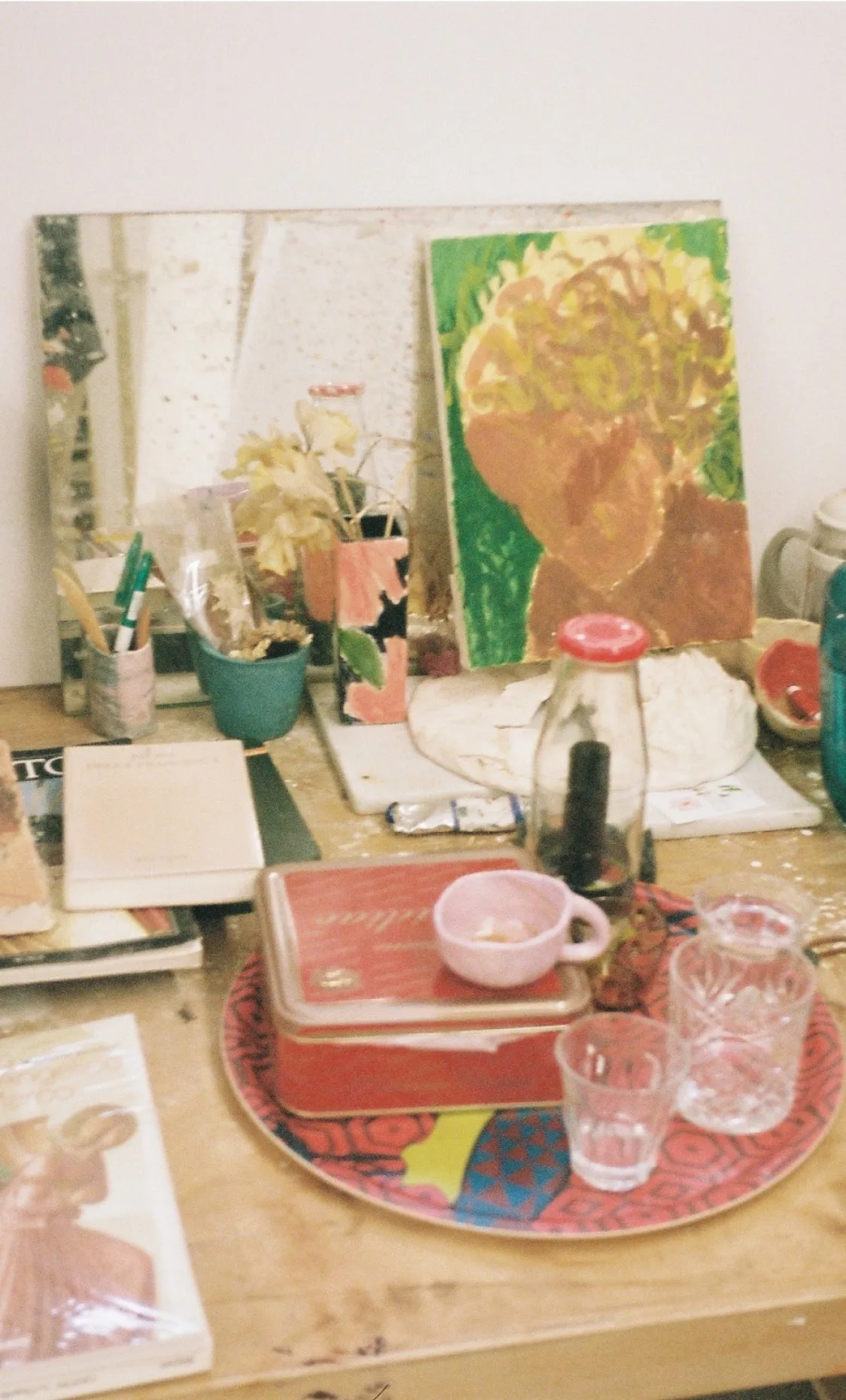
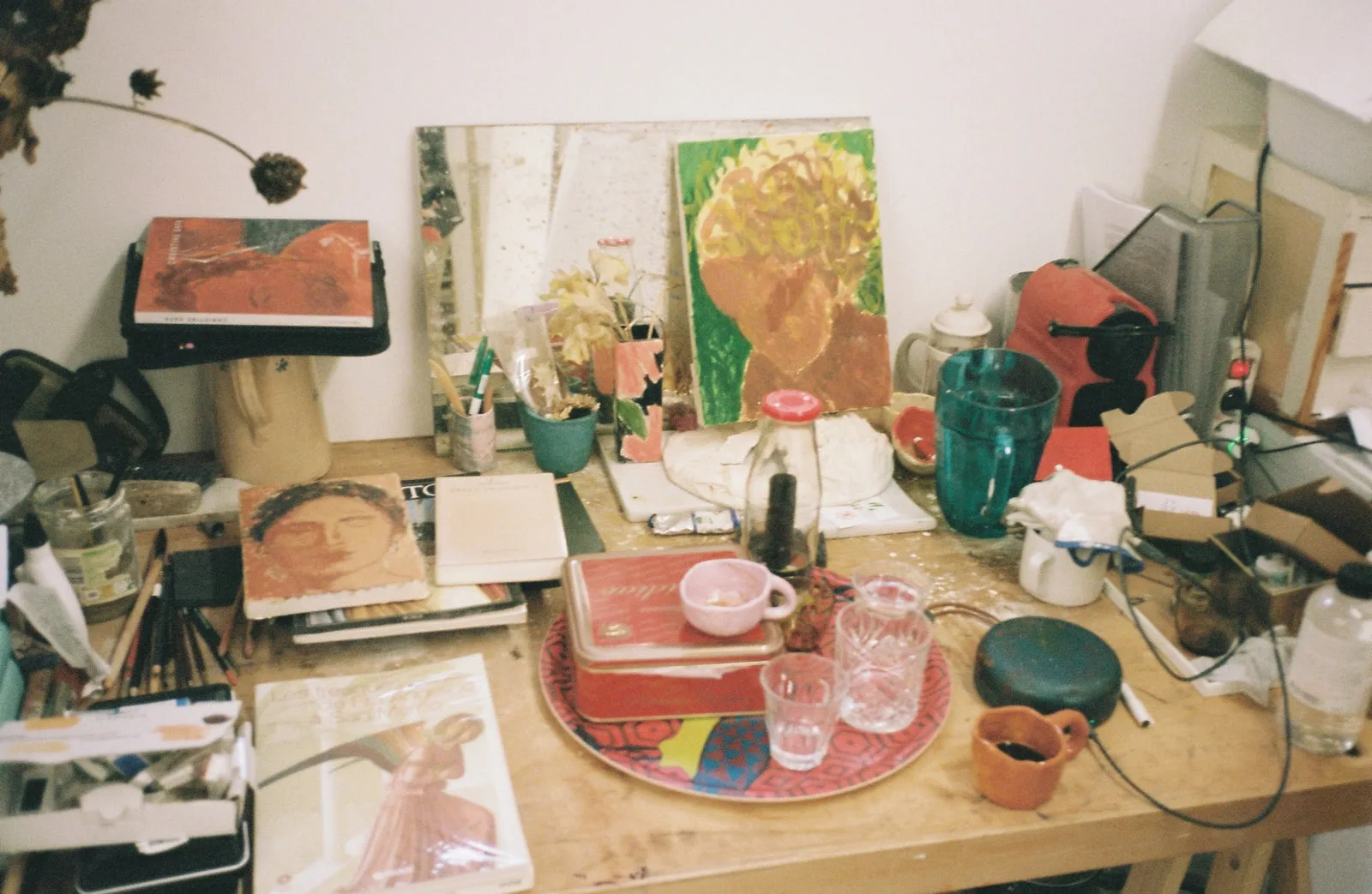
IMG #02
Christine's table with some of her books that she often consults: Fra Angelico and Giotto as well as the catalog of one of her exhibitions
IMG #03
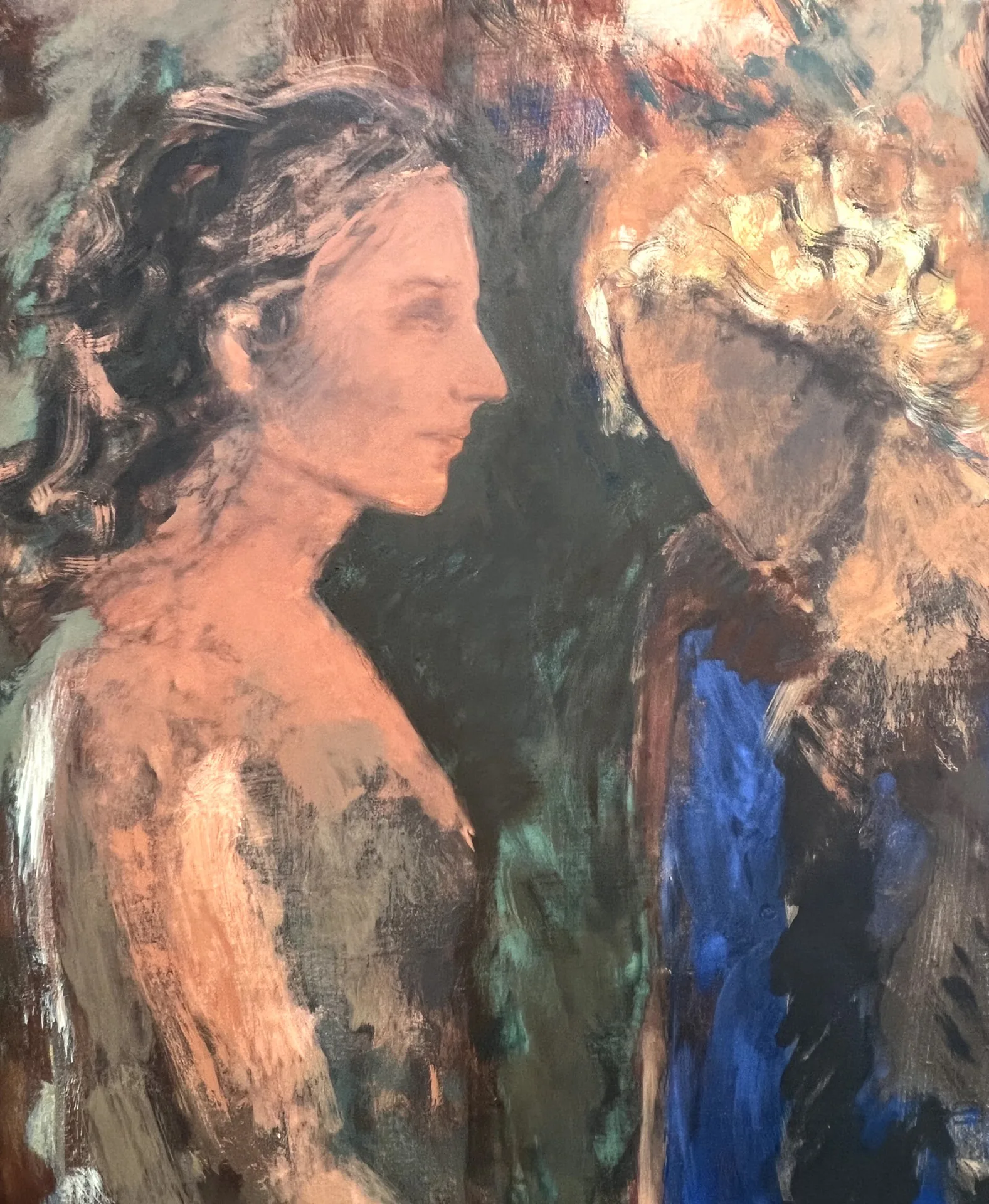
detail of a painting in progress:
Christine and her fiancé Nathan
JD: What was that experience like? Is it very framed?
CS: It’s very free, so you either frame it yourself or you get lost and stop. It’s a school where you learn everything at the same time. Including getting to know each other! I was very reserved when I entered, I was still young, I was only 18 or 19 years old. I am an only child and I was very preserved. For me, the Fine Arts were an opening to the world that I only half knew.
JD: What do you mean?
CS: I searched a lot for myself, both as a
person and as a painter. At first I had a job
which was a little more politicized. I returned to Fine Arts with work that spoke a lot about Lebanon, the war, things that didn't really belong to me in the end, since I was there during the holidays. Obviously there was a lot of sadness, but I always had the possibility of being able to return to France. At the Beaux-Arts I was quickly told that I had to talk about everything that was happening in the Middle East.
JD: That your work is more engaged, more politicized?
CS: I don’t know if it was a necessity. But for two years, my work was a bit centered around all that, the war, quite raw images. Gradually,
with my meetings at school, I understood that my simple presence in that school was already a political act. My meeting, for example, with the painter Nathanaëlle Herbelin who is Israeli. It was not while living in Lebanon or in a much more closed circle in Paris that I could have crossed paths with him. She was two, three years older than me. I was fascinated by his work but also by his journey, a bit similar to mine.
JD: Did these meetings have an influence on your work?
CS: I was wondering: should we literally paint what is happening in this region of the world or can we afford to paint something else. Why wouldn't I allow myself this honesty - to paint things that are more me, my own experience and not what I think is expected. I am not a journalist. So it’s not my job to point out the news. I grew up in France, Lebanon, I go there because there is family. There is a lot of love, a lot of sunshine, a lot of joy. At the same time, there is this contradiction. I know that it is a country marked by a serious history. Either I am there and I
share what the people there experience on a daily basis, or I am here and I live vicariously. A sorrow that is unfortunately inherited from family to family.
“I asked myself the question: should we literally paint what is happening in this region of the world or can we afford to paint something else.”
Christine SAFA
JD: How did you experience this duality growing up?
CS: As a Lebanese, I accepted this transmission. I had the chance to grow up here with this other culture too. I went through phases where I only saw myself as French, others as Lebanese. My balance between the two is actually quite recent.
JD: Were they your parents or your grandparents who came to France?
CS: My parents. It was in the middle of the Gulf War, my father was already working in Saudi Arabia. They are married and they lived in Saudi Arabia for a year before my father accepted a position in France. They didn't go back for a while, now they live in between.
JD: Their heart is still in Lebanon? Do they go back there often?
CS: Yes, my parents were there in September and we had to return in a bit of an emergency with what was happening at the moment. They spent four months in Lebanon. Christian neighborhoods are not currently targeted. On the other hand, they heard the explosions. They see them. It's like a sad habit. Today, it is stronger than in the past: the
weapons are much more technical, always more enormous. Since my childhood,
we never left Lebanon saying it's okay, we'll go back in two months, there won't be any problem. When
we leave him, we never know when we will see him again. I think I created a bond with Lebanon because I saw my parents love this country and the heartbreak when we left it.
JD: It must be very striking.
CS: My parents always spoke about Lebanon in a beautiful way. I wanted to pay homage to this country by
painting things that really belong to me, from my memories from there. I very quickly tried to do more landscapes of Lebanon.
JD: You can feel it a lot in the colors, the shades are full of warmth.
CS: Gradually, I understood that I also have a large part of my life here in France. For a while now, I think we've also been seeing colors that are a little more neutral or just different from the ones I used before. You could sort of give me an orange, blue, red label.
IMG #04
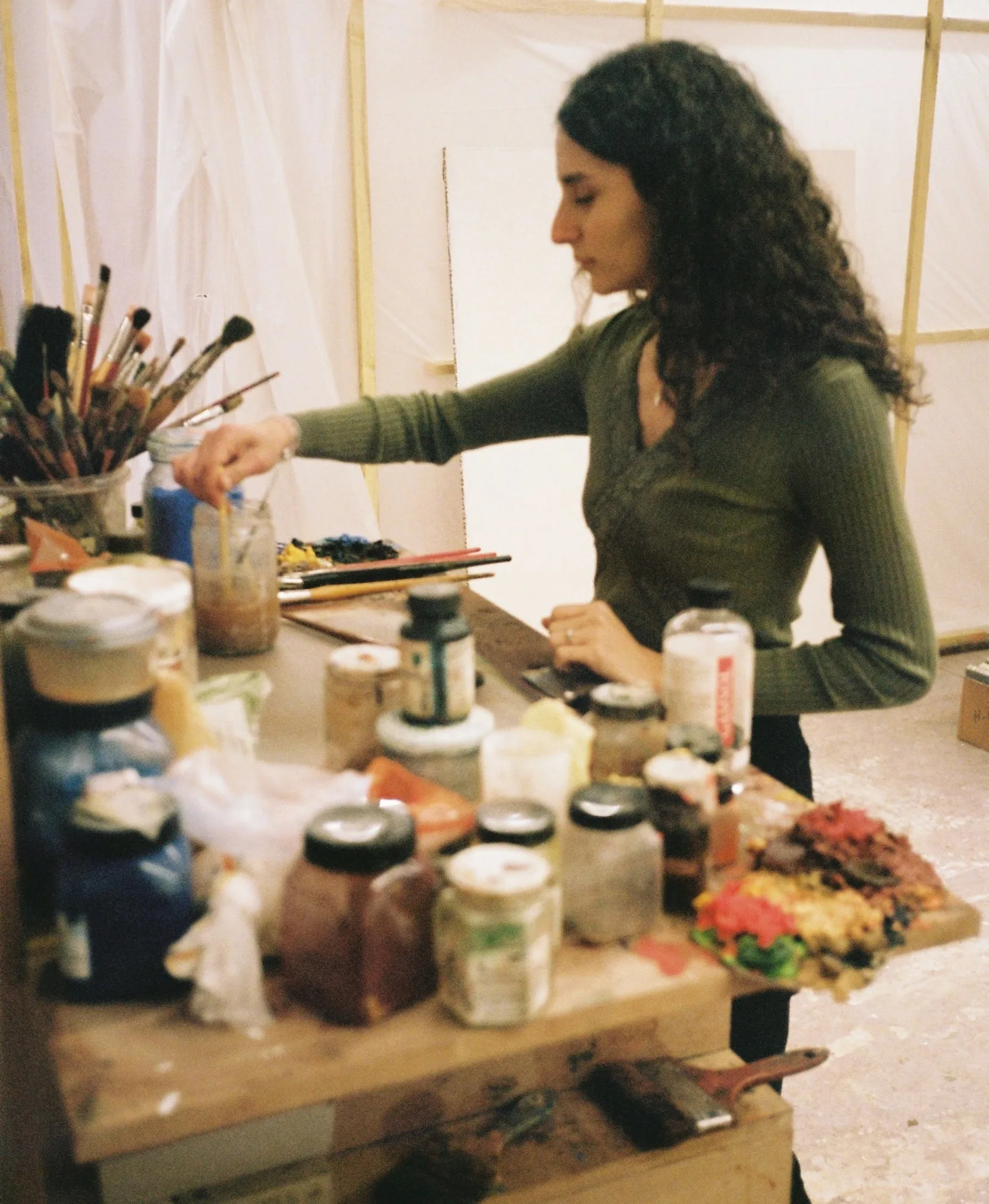
Christine Safa at her work table
IMG #05
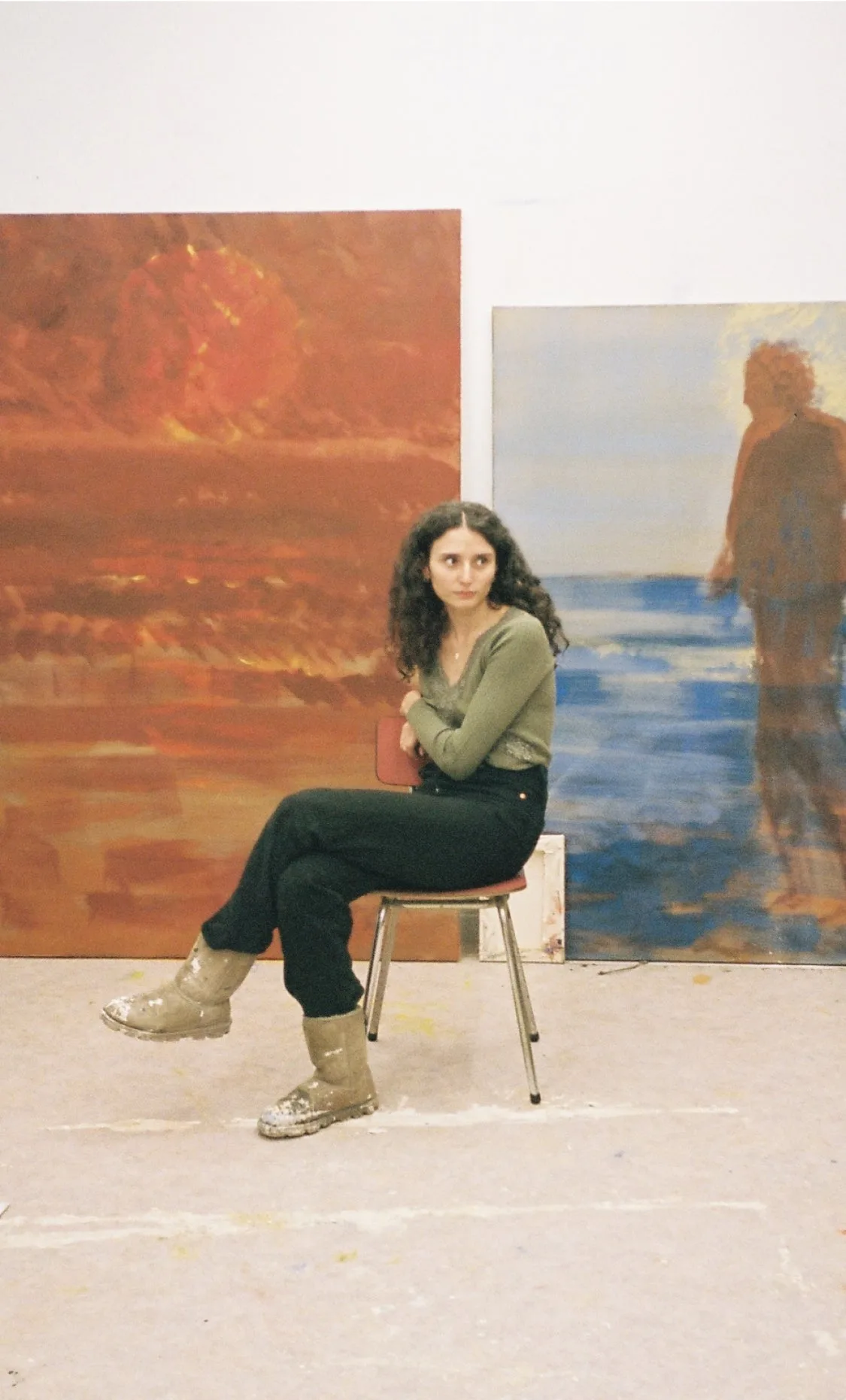
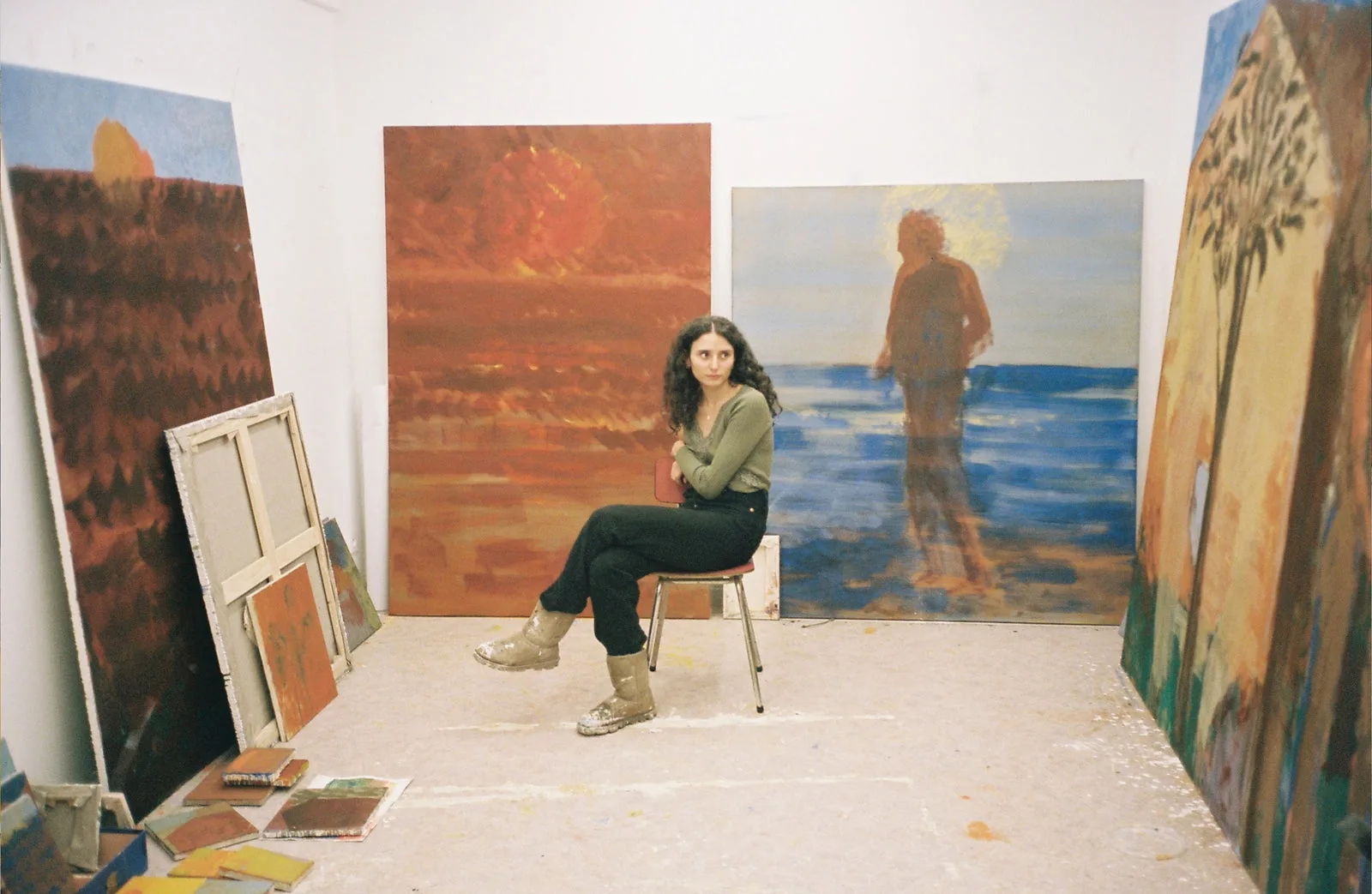
Christine among her paintings in progress
IMG #06
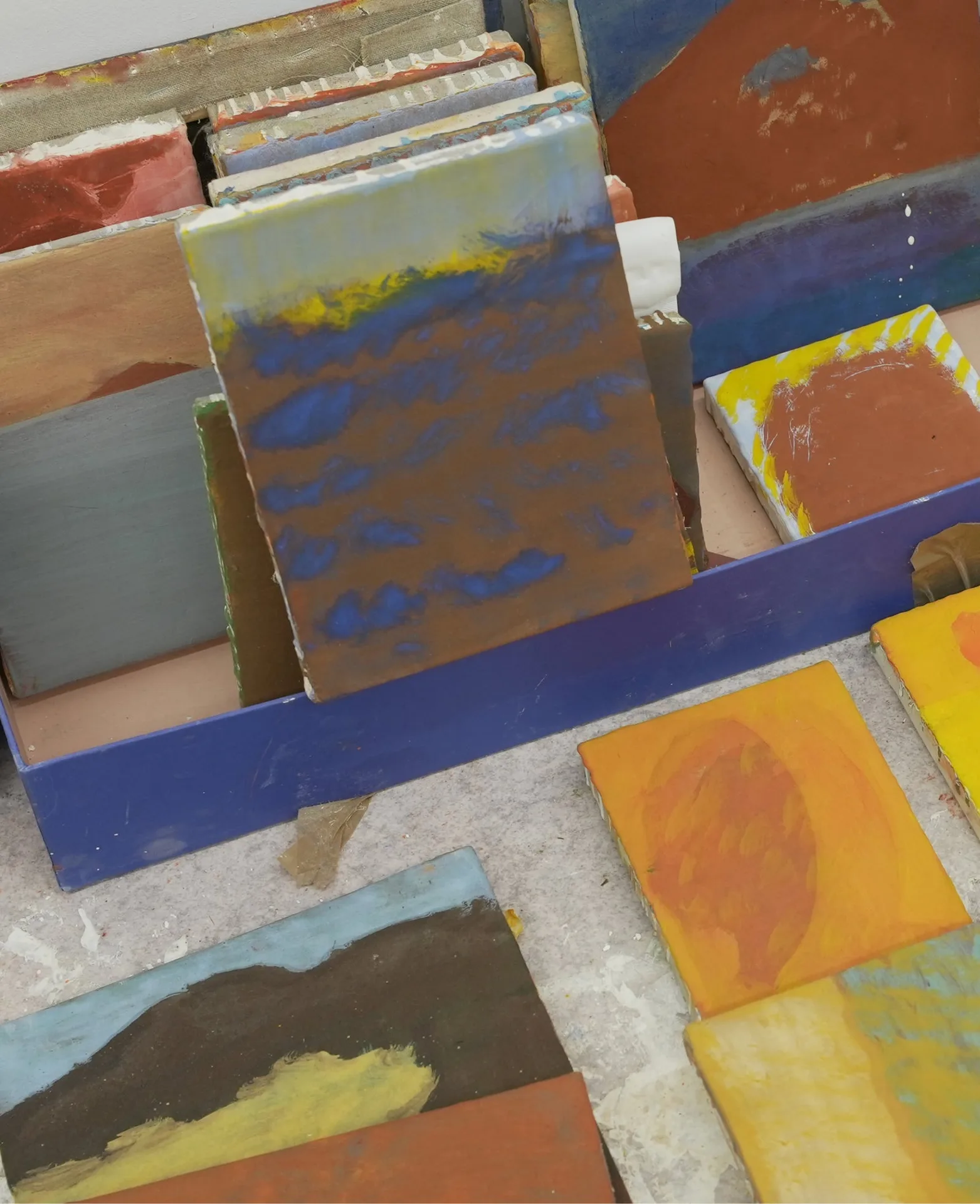
details of current tables
JD: These are also phases, right?
CS: With my fiancé Nathan, who is also a painter, we spent four or five months in a residence not far from here in the countryside, with lots of green. I don't really paint from what I'm experiencing at the moment. It often comes after the fact.
JD: Do you paint a lot from memory?
CS: There are a lot of images that I take, I can get inspiration from books too.
JD: It’s to have more
space and freedom afterwards?
CS: I have understood since school that when I lock myself into a too fixed image I quickly get lost in details that are not necessarily interesting. I also talk a lot about the same subjects to have a new version each time and allow myself a little more freedom. I don’t want to have just one way of painting. I can make a realistic portrait, another much blurrier, more refined. And also just mentally satisfy myself and tell myself that I haven't missed anything.
You can have different versions of this same painting which are each very good. I can mix the figurative and the crazy. Not having to make a decision helps me accept myself. If this version is too advanced or too literal, I can have the same version but much more evocative. Both can please me, as a painter and as an audience.
JD: Which painters speak to you the most?
CS: I like painters like Fra Angelico or Giotto. Renaissance monks - besides that I can like much more abstract things like Rothko, more refined American painters.
JD: Did you already have some knowledge of art history or did you learn everything at the Beaux-Arts?
CS: I didn't know anything. I remember very well that one day in my final year a teacher was talking about Jeff Koons, whom I didn't know, and I felt very bad.
JD: At the same time you weren’t immersed in it.
CS: Yes, I knew the classics like van Gogh.
“My parents always spoke about Lebanon in a magnificent way. I wanted to pay homage to this country by painting things that really belong to me, my memories from there.”
Christine SAFA
JD: Your fiancé Nathan Bertet is also a painter. Do you work nearby?
CS: He works in a workshop a few minutes by bike from here.
JD: Do you talk a lot about your respective practices?
CS: Yes, it’s really a relationship that was formed around Beaux-Arts. Flirting, discussions…
JD: Things are happening there!
CS: It’s almost Secret Story (laughs).
JD: There is a whole generation of young painters at the moment, there is a real scene that has formed. Are you all close?
CS: We are all close, like a little nucleus on which each person has other little branches. In fact, there are more of us, but in itself there is really a very small core that is being highlighted a little at the moment. This is what Nathanaëlle does very well. She tries to highlight our other friends who are a little less so. Because we don't do anything alone and everything we do individually has been forged in this school in a totally anarchic manner. We've been through so much together. I would not paint the way I paint today if I had not met Nathan (Bertet), Nicolas (Gaume), Nathanaëlle (Herbelin).
JD: When did you graduate?
CS: Six years ago, Nathan last year. Nicolas three years ago I think? We all crossed paths and it created discussions, questions, reunions. It was nice to have people, friends and artists who have the same way of thinking, who have the same tastes, or sometimes not. We have similar sensibilities, the same people that we revere a little and each has their own little thing that the other won't necessarily like, but that's how we differentiate ourselves in the end.
IMG #07
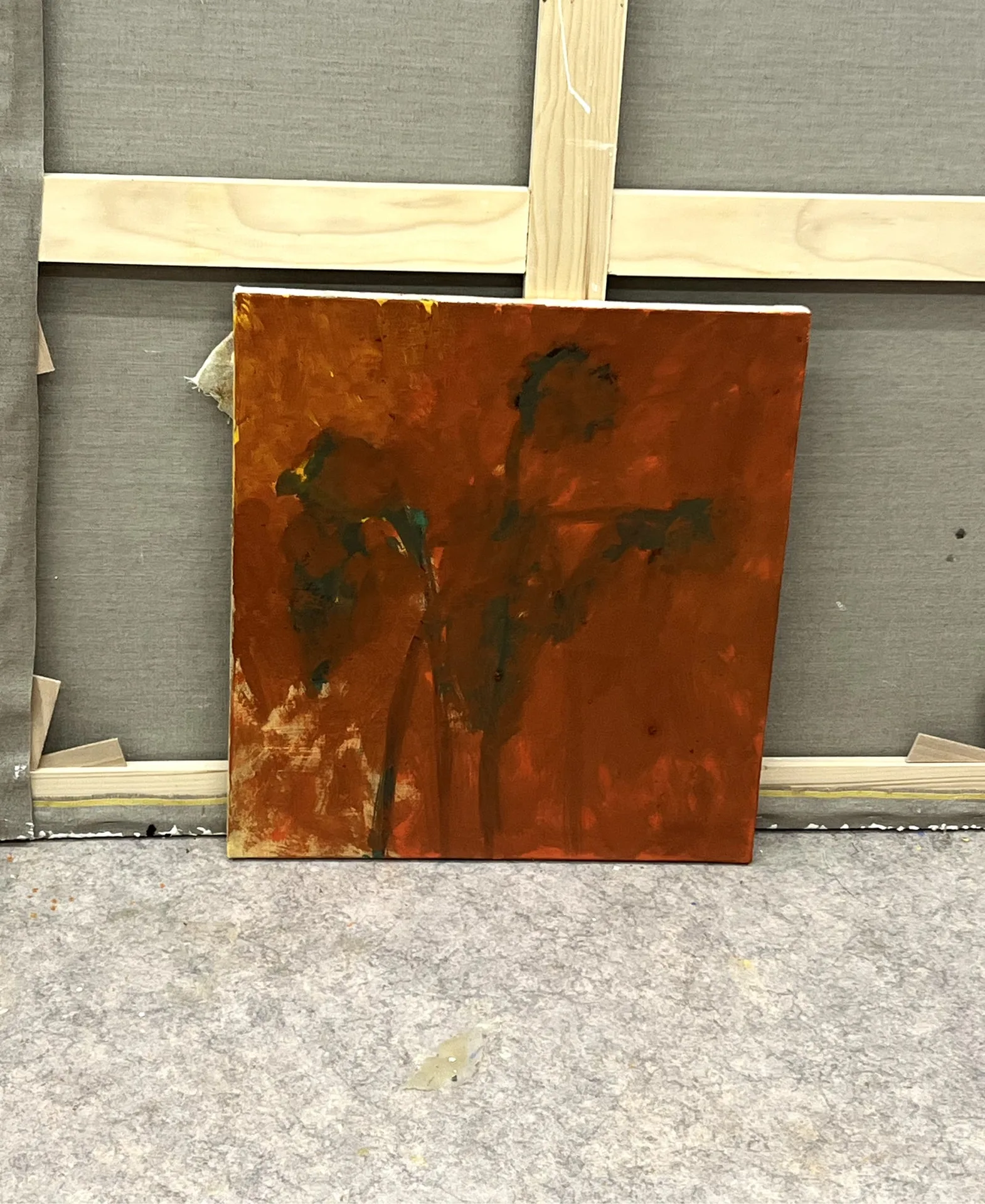
painting of sunflowers, w.i.p
"I also talk a lot about the same subjects to have a new version each time and allow myself a little more freedom. I don’t want to have just one way of painting. I can make a realistic portrait, another much blurrier, more refined."
Christine SAFA
IMG #08
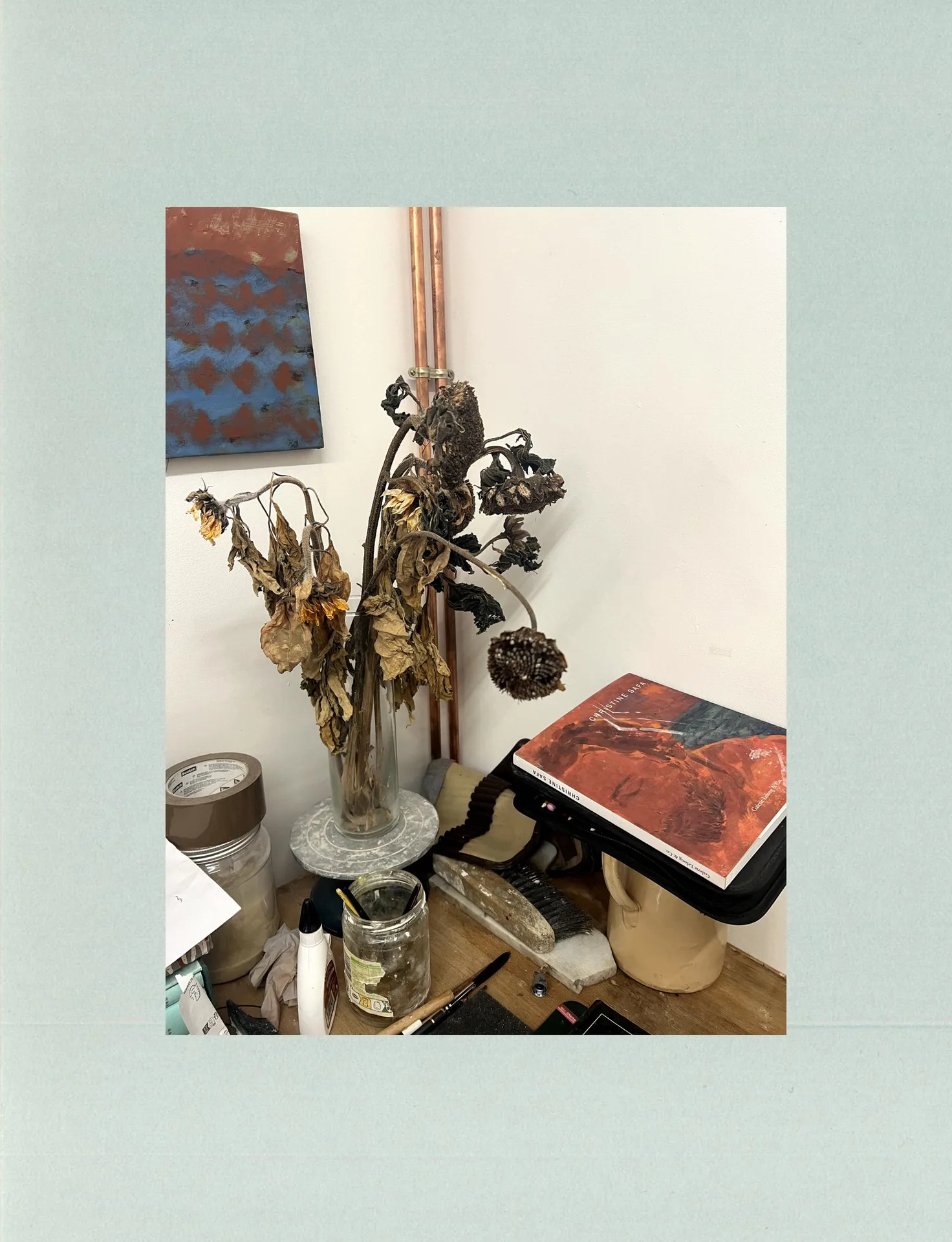
dried sunflowers, a gift from a friend, which she often paints
JD: What are you working on at the moment?
CS: I am preparing an exhibition at the Lelong gallery for fall 2025. It is a personal exhibition. Each time, I try to have at least a year to prepare the exhibition. I need time to think about it. I have to work, the paintings are not done in a month.
JD: How long have you been working there?
CS: I did an exhibition in New York a few months ago. It was a big exhibition, my first solo in the US. I need time between each big exhibition because they are in addition to collective exhibitions and fairs. It's normal to have to take paints out of the studio throughout the year. So, at the same time, I ask them to still have a big year to paint.
It's only a few months before the exhibition that I know what painting I'm going to show.
JD: Is it free enough? There is no theme, or can you choose it?
CS: They let me work. I myself don't know what I'm going to show.
JD: There will be paintings that you have never shown?
CS: Yes, when it's in the gallery it's really just new paintings.
JD: How many do they charge?
CS: The space is quite big. I give 10, 15. There is this double portrait which will be part of it and there will be this second
behind. I haven't started yet, but it will be
same format.
JD: Do you have blank canvas syndrome? A bit like writers with a blank page?
CS: I try not to find myself with nothing in the workshop. As soon as there is a big wave of paintings leaving the studio for an exhibition, I try to have paintings in progress. To be able to continue, so that everything is more fluid. It's something I've learned since finishing school, I don't want to end up with nothing.
The paintings courtesy Christine Safa and Galerie Lelong & Co
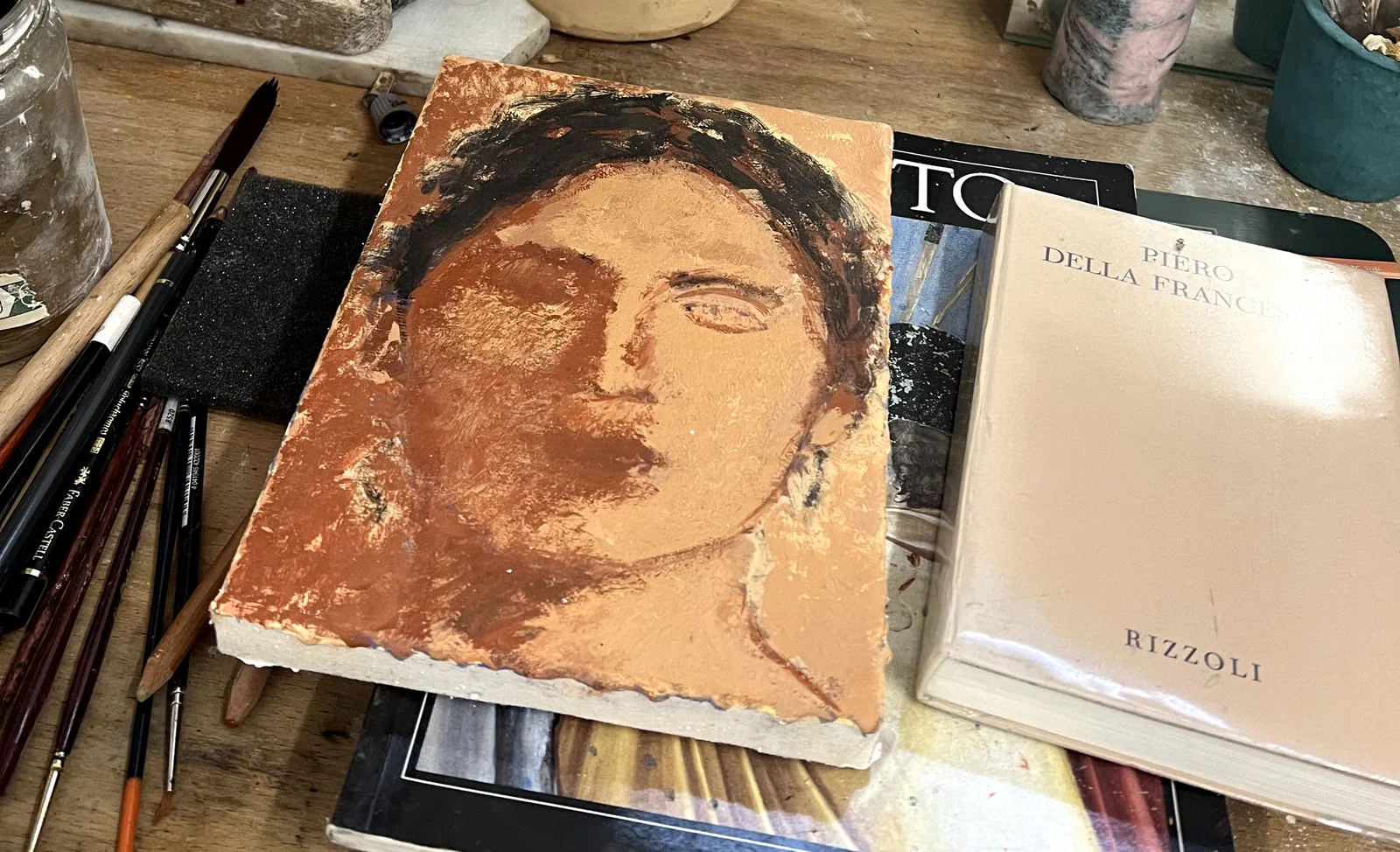
IMG #09
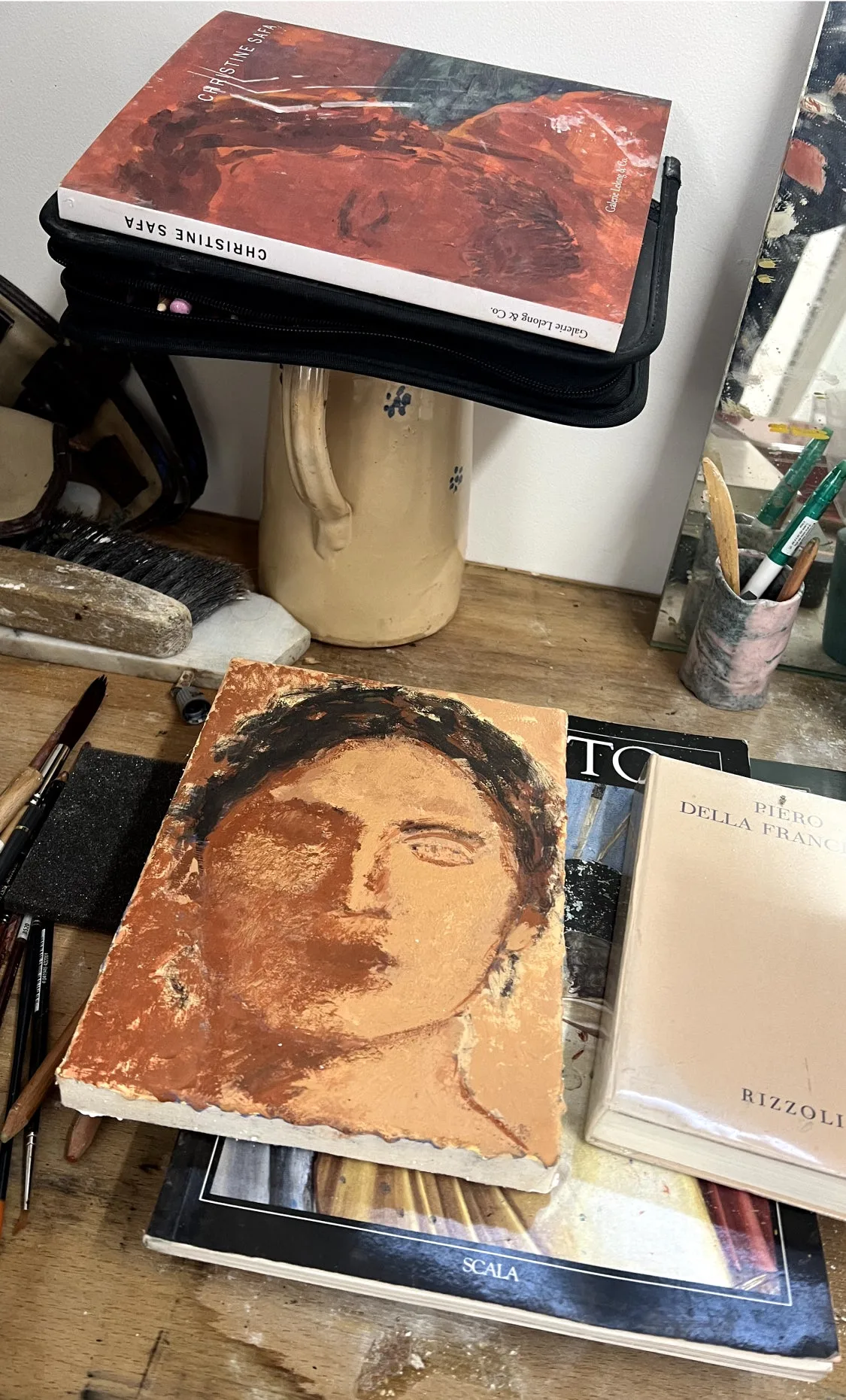
self-portrait in tempera, from the books of Pierro della Francesca and Giotto:
Renaissance painters who inspire him a lot
More ARTIST ROOMS